Bad Reviews, Writer Feedback and Basing Characters off Real People: I Answer Reader Questions About Being a Writer

Asa A. writes:

John, My son is an aspiring writer. But whenever I try to tell him I wish he’d branch out from writing stories about small animals being tortured, he gets very upset. As a writer, what kind of feedback do you value most from readers?

Feedback can be a tough thing. I became a writer for a few reasons, but mostly so others would like me and pay attention to me and constantly tell me how awesome I am. But of course, you can’t expect all people to respond to your work that way. Some people are just idiots who don’t understand good writing, and some are people who do understand good writing, but just want to insult you because they think it’s funny or they want to put you in a negative light to promote their own writing.

In any case, the feedback I like is when people tell me my work turned their life around. As a good friend once told me, saving a life is as exhilarating as taking it away.

James D. writes:

John, my marriage is falling apart and it’s largely your fault. My wife inexplicably loves your books but I don’t see the appeal. I feel like I couldn’t really love someone who likes what you do. So my question is, What’s your favorite book you’ve written? If I read that and liked it, it might just save this marriage.

That’s a tough choice. While Spilled Milk was the first book I published on an actual label, and Twilight was, for some reason, my financial breakthrough, I’d have to say Zodiac was the book I was most proud of. For those who haven’t read it, the novel is about the Zodiac killer, a fictional serial killer who plans to kill twelve different people over a twelve-year period, using each animal of the zodiac. I thought it was a clever concept and I really had to get creative and push myself as a writer to think of ways a rat, a rabbit and a rooster could be used to kill someone.

Emily W. writes:

John, my coworkers were upset that I wrote a fictional short story for an online magazine that used their real names and addresses. Should I not have done this? Do you base your characters on real people?

– Oh, all the time. Pretty much any villain I write is at least somewhat loosely based on my father or the prostitute who helped raise me. If there are women in my life who, you know, I’d like to have sex with but can’t because they’re married or lesbians or certain laws prohibit me from doing so, I find it helps to live out that fantasy in my writing.

Eva E. writes:

John, writing for me is just a hobby at the moment. I have a great job designing algorithms for healthcare companies that decide which patients should live and which should die. But part of me wants to make writing a full-time job. I worry about deadlines, though. How do you deal with the pressure of meeting deadlines?

This really was never an issue when I was a young writer. I was so motivated and on so many productivity-enhancing amphetamines that I wrote faster than my editors could keep up. But in my middle age, I have slowed down a bit.

There are some small hacks you can use. You can tell your publisher you misread the date, you can tell them your kid got sick, or you can puff out the middle section by copying and pasting excerpts from the Canterbury Tales. Editors usually only read the first and last pages of a manuscript, anyway.

Johnny S. writes:

John, do you ever consider the reader’s perspective when writing?

No.

Anri. O writes:

John, I’m a self-published author with a few books out and mostly good reviews. But one person keeps giving me the harshest reviews on social media. It’s either my step-dad, mad that I refused his sexual advances, or my boss, mad that I keep advancing on him sexually. Anyway, how do you deal with bad reviews?

An author can’t let bad reviews get to them. Unless you know the reviewer personally, then you absolutely can. My lawyer says I shouldn’t give you any advice about your specific situation, but I will share something that worked for me once.

I had this one reviewer who constantly review bombed all my books on all the online bookstores. But their big mistake was using the same username on all these platforms. After a little social engineering, I learned it was actually a person from my own publishing company upset that, because of a clerical error, they hadn’t been paid in five months. Talk about a “the call is coming from inside the house” moment. Now, I don’t care what you say about me personally or about my ability to lead people as a boss and make sure they receive at least minimum wage. But leave my works of art out of it, you know. We eventually agreed to have that worker be compensated for time unpaid plus an extra month’s salary if they promised to take their reviews down. So it all worked out in the end.

Angela W. writes:

John, I can’t stand the sound of your voice and I hate your videos, but I did end up reading your most recent book, Glossolalia and Other Stories, and I was surprised to find it witty, insightful, poetic and exactly the opposite of how you come off here. Anyway, what authors did you dislike at first but grew into?

Well, scifi writer John Scalzi was somebody I didn’t really like. Not because of his books, but because he threw me out of one of his book signings for trying to secretly endorse several books on the D&E label. But then years later, we were actually on the same panel at a book conference and we hit it off. Ended up going to a strip club later. Lovely guy.

Finally, we have Scarlit S. who writes:

John, I want to start writing, but my boyfriend says I’m too racist to be a writer. So my question is, what’s one thing you’d give up to become a better writer?

Well, first of all, lots of great writers are racist: Ayn Rand, Margaret Mitchell, HP Lovecraft. So even though I don’t agree with your views, don’t let that stop you.

But for me, this is an easy decision. I’d give up one of the children my first wife claims we had together before she ran off.

I Tried This Nine-Step Story Writing Formula (and I can’t believe how useful it was)

Lots of writers hate the rigidity of a writing formula. After all, writing should be an organic process, not something measured in steps. You’re not making yellow curry, or performing funeral rites, or attending AA meetings that the judge forced you to attend after puking into the open window of a police cruiser during a wild Presidents’ Day celebration.

But if you want to write a story quickly, and the thought of getting rich and famous and finally being able to abandon your family doesn’t motivate you enough, a good writing formula can be a big help.

This writing system was created by Antonya Nelson, a writer whose work I won’t mention or link to because I don’t believe in other authors getting more attention than me. But take my word for it, she’s a pro who knows her stuff.

Step 1: Write About Something That Happened To You

The first thing you need to do is get words on the page, and there’s no better place to start than your own life. Think of something that would be emotionally resonant. You could write about a priest who molested you, or an uncle who molested you, or the dog you had to put down because you could’ve sworn it somehow was knowingly and purposefully molesting you.

When I used this method, I wrote about my first wife, particularly about how she disappeared shortly after I discovered she was a serial bigamist.

Step 2: Rewrite the Same Story From a Different Point of View

As the counselor in my road rage support group taught me, it’s important to take a step back and see things from other people’s perspectives. This applies just as much to writers.

To most people, it might’ve made sense to tell of my first wife’s bigamy from my perspective. But I realized my disillusionment and heartbreak might be muddied by the fact that I was cheating on her with the woman who would eventually become my second and by far favorite wife. So instead, I wanted to get inside her head and try to explore the psychology of a woman who married others compulsively.

Step 3: Create a Ticking Clock

Stories rely on momentum. In real life, drinking too much on Presidents’ Day might lead to court-ordered community service that derails your efforts to track down your missing wife, but a story can’t have random digressions like these.

A ticking clock not only propels the story forward but also culminates with a climax that readers expect and crave. When I rewrote my story from my wife’s perspective, I gave her a father who was dying of cirrhosis. She had nine months to scrape up enough cash to buy a liver for him on the black market. In real life, I never met Barbara’s family, as she told me they wouldn’t like me because they were racist against the Irish.

Step 4: Introduce Significant Objects

Frodo’s ring. The suitcase in Pulp Fiction. The magic golf club in The Legend of Baggar Vance. Fiction relies on symbols to deepen the meaning of your story.

If you’re lucky, this symbol might already be present in your narrative. But you also want to avoid cliches. Something like an engagement ring would probably come across as tacky. Luckily for me, Barbara and I never exchanged them as we’d gotten married so quickly we both forgot. So instead, I chose a special duffel bag in which she kept all her different fake IDs and cash and wigs.

Step 5: Establish a Transitional Situation

Sometimes this is easy to forget as many of us go to work, write and watch YouTube every single day until we die, but fiction depends on change. Your character must have some significant shift in their life or situation.

For my story, that was easy. It was the moment Barbara decided to leave me. Of course, I had to change the circumstances a bit. In the story, Barbara sneaks up behind me and bashes me on the head when I find the duffel bag in the closet and when I come to, she’s gone. In real life, I discovered Barbara missing after returning from an erotic three-day holiday getaway with my soon-to-be second wife at Disney World.

Step 6: Integrate a World Event

You can do this to be symbolic, to anchor your story in a way that’s more relatable to readers or to help market it.

I played around with a few ideas as I was editing. I first thought about setting it during the French Revolution, for example, but abandoned that idea when I remembered that cell phones didn’t exist then. Instead, to underline the sense of hidden intent and double identities, I set the story during the final season of Hannah Montana.

Step 7: Develop Binary Forces

Jocks vs. Nerds. Snobs vs. Slobs. Shiites vs. Sunnis. All classic rivalries that make for compelling drama and drive the narrative.

In my story, there was already a clear binary. Man vs. Woman. But I wanted to go a bit deeper than that. In real life, I didn’t know Barbara all that well, or at all, really, it turned out. I mean, she said she liked Shakespeare and tennis and hardcore porn just like I did, but I realized these commonalities were probably just part of the con, a way to worm her way into my life.

Anyway, in my story, I established a second binary by having her be in favor of the Many Worlds interpretation of quantum mechanics while the husband was partial to the Copenhagen interpretation that insists of wave function collapse after measurement takes place.

Step 8: I actually don’t remember step 8

Step 9: Embrace Experimentation

This is usually the point where I tell you to ignore everything I just said and do something completely different. And this article will be no exception.

But, you don’t have to throw away a perfectly good story just because it might still be too embarrassingly close to what happened to you in real life. Keep playing around with the format. Write the story as a Yelp review. Write it as something your character brings up on his friend’s dad’s death bed.  

For me, the only thing I did was change the point of view again, this time to the second person. Turns out lots of people are really insecure about their relationships and I was able to play into their anxieties pretty well.

Top Tips for Crafting the Perfect Story Ending

Story endings are one of the most things to pull off as a writer. Because of this, it’s going to take me all year to create this video, as I’ll likely have to piece it together little by little.  

Anyway, like sex, a great ending should be an emotional release that all your hard work, all those jogs, all those fasts, all those kegel exercises, culminates in, so to speak.  But unlike sex, a writer needs to at least to attempt to satisfy the person you’re performing for.

It helps to think of some of the great endings of fiction and really analyze why they work so well. The ending of the original Star Wars works so well because it satisfies the audience’s basest, primal bloodlust. We cheer because the hundreds of thousands of sentient beings who are not in our in-group have just suffered an unimaginably painful death.

A great ending should have the following elements: it should resolve your central conflict, it should satisfy the reader, it should illustrate the character’s transformation, and it should take your reader by surprise. To illustrate this point, let’s look at Business As Unusual, a book I just released at the beginning of 2024. The novel follows Tabitha Martin, a young girl trying to make it in the big city while taking care of her sick brother. You can skip ahead if you don’t want any spoilers, but the novel ends with the character’s brother dying.

It solves the central conflict because she’s able to live her life now, it takes the reader by surprise because the brother doesn’t die of cancer but is instead absolutely pancaked by a bus, and it satisfies the reader because Tabitha finally has time to pursue the sexual relationship with her boss that she hinted at by dressing slutty to work.

Now, let’s look at some more general tips that work for all kinds of fiction.

Step One – Know Your Ending Before Writing

You want to take the reader by surprise but not yourself. Wild twists that don’t really make sense just make you look as emotionally unhinged as a drunken secretary who advances on you sexually at an office party even though you barely know each other.

Now, have I written books without knowing the ending in advance? Well, of course. When you write 430 books in 27 years, 13 of those being periods of heavy drug use, both self and externally-administered, things like that are going to happen.

Dawson, a book I wrote as a young man, is a particularly bad example of this. I wrote it without ever knowing who the killer was and in the end I had no choice to make the titular character the killer because his only alibi was that her didn’t remember where he was on the night of the murder.

Step Two – Try Out Different Types of Endings

Despite what many authors might tell you, you don’t have to know your ending in advance. Write three or four different endings. If you find one that surprises you, it may surprise readers even more.  

It can be very liberating as a writer, too. We don’t get to choose different endings in life. We may have let a job opportunity go by and spend the rest of our life regretting it. Or we might spend our days casually flirting with bar patrons, yoga classmates and coworkers with the vain optimism that one will eventually match the charisma and beauty of your second wife, only to have them bore you with the details of their similarly depressing life.

Step Three – Leave Room For Interpretation

This can depend on the kind of story you’re writing. If you’re writing a series, you may want to tease that the villain might’ve survived the final battle. And some very powerful pieces of fiction have ambiguous endings that readers may argue over. Call Me By Your Name and American Psycho are two great examples, as is a recent novel that I’ve had to remove from the market for reason I won’t get into. All I’ll say is that this book ends with the main character finally free to pursue a romance she’s wanted the whole book, but it doesn’t tell us her final decision.

But real life is messy like that. Sometimes people say things that can be interpreted in a variety of ways. Like, imagine your secretary walks into your office at five o’clock and asks, “Would you like me to stay late?” How would you interpret that?

Sure, it could mean, “I am willing to stay late to reduce the amount of work you have to do.” But it could also mean, “I can’t wait until everyone else leaves so it’s just the two of us alone.”

Anyway, as I’ve often told my lawyer, it totally makes sense why two people might interpret that differently.

Step Four – Tie Up All The Loose Ends

Fiction should be neat and tidy, unlike real life. Look, I’m a busy man. I can’t be writing twenty books a year, running a publishing company, doing this web series, all while remembering every conversation I have with every person. This libel stuff… it’s just a desperate plea for attention from someone who could barely be a receptionist, let alone someone who thinks she knows the ins and outs of libel laws as it applies to fiction.

And the sexual harassment stuff is just… I’m not even going to dignify that with a response. I’ve had lots of people come through my office doors and like most bosses I have had sexual relations with a few of them, so that right there already tells you I didn’t target Tiffany specifically. In fact, I was sleeping with two other office assistants while we were in a relationship. So how could there be a quid pro quo if I was getting it from multiple people? Was I playing favorites with all of them? That doesn’t even follow basic logic.

Anyway, back to the libel stuff… if Tiffany had ever listened to my advice, she’d know that’s what a great writer does; he gets inspired by the world around him. Now she wants to take down the company that paid her salary for an entire seven months? Give me a fucking break.

The Art of Travel Writing

Imagine that you’re sitting at a sidewalk cafe in a foreign city. You put your book down. You take a moment to savor the unfamiliar flavors, to smell the unfamiliar aromas, to listen to heated conversations in an unknown language, to watch plainclothes police drag a screaming woman into a panel van. And you think to yourself, somebody ought to write a book about this place. If nothing else, I hope this article shows you that travel writing isn’t just for wives of hedge-fund managers desperate to prove their life isn’t worthless.

So what is travel writing? Travel writing is a loosely-defined genre that includes travelogues, guidebooks, memoirs, travel journalism, snapchats from Phuket, Yelp reviews of Vegas brothels, and letters to the consulate to get you out of Moroccan prison. For the sake of brevity, we won’t focus on those last few.

The first question you might be asking is, Do I actually have to travel to these places to write about them? Of course not. Travel can be expensive, dangerous, and mind-numbingly boring. Hell, I’ve written travel books about Damascus, Port-Au-Prince and Jackson, Mississippi and God knows I’d never be caught dead in any of those places. But if you don’t travel to the place you’re going to write about, you’ll need to put in extra work on Wikipedia, Google street view and watching movies filmed in that location to make sure you get things right.

For the rest of this article, however, we’ll assume you tricked your boss with a fake family death to get enough time off to actually travel to these places.

Step One: Write From a Unique Point of View

Remember, you are writing as a traveler and an outsider to the community you’re visiting. Now, it’s possible far-flung regions like India and China have had talented native writers who’ve written about their homeland, but that’s not what you’re going for. Take your reader into account and think about what value they hope to get from your writing. Do you hope to help them navigate this strange land when they visit? Do you want to share some off-the-beaten path sights away from the large tourist traps? Do you want to tell them where they can purchase a child bride, so they make sure to stay away from that spot?

However, it’s also important to be aware of your biases. It’s best to write in the first-person. Travel writing should have the intimacy of a diary and this way the reader is aware of your subjectivity. So, for example, your readers will understand that your local hosts might not be so open-minded to slaughtering street dogs for meat as you are. 

Step Two: Be Honest

Whether it’s a local dish you found to be disappointing or an old high school you’re certain is being used as a death camp, it’s important to be honest about your experiences as a traveler. Your reader will want those moments of authenticity. Not all trips are sunny beaches, picturesque vistas and nubile masseuses who allow roaming free of charge. Make sure to share those dead ends, scams and overrated traps as well.

In my most successful travelogue about my time in Bahrain, I wrote about a misunderstanding at the local pharmacy. While I asked for Advil, I was instead taken into a backroom and asked to deliver endangered osprey eggs to a government official in Hong Kong. While my publication of the incident means I’ll be executed if I ever return to Bahrain, it did make for a great story. This brings me to my next point.

Step Three: Interact with locals

Your reader, like you, want to absorb as much local flavor as possible and that’s not possible without at least trying to engage with the locals. Even if you don’t speak the language, pay attention to their body language. When I was in France, I couldn’t count how many people would stick their middle finger up to me as I passed them on the street. A local guide said it was their way of complementing my attire.

If you can get a translator or know someone who speaks English, soak up as many stories as you can. In Pakistan I met Hashim, a young man with a great passion for computer engineering. Many things about Hashim struck me as unique: his eagerness to share his life’s details, the way he’d hold my hand in public, or run his finger through my hair, his comfort sleeping next to me, completely in the nude, no modesty about hiding his erection. And though he was forcibly removed from my hotel and I never saw him again, I like to think he lives on in my writing.

Step Four: Stay up-to-date

If there’s one constant in world history, it’s that there are no constants. Borders, kings, queens, and laws regarding drug trafficking change constantly. Czechoslovakia became the Czech Republic which became Czechia which is now just Kia.

You never know when a war might breakout during one of your trips. This is just an unfortunate reality you’ll have to accept. When I was in Yemen in 2014, nobody could’ve predicted this prosperous, stable nation with prompt, efficient room service was moments away from civil war.

But you don’t want to publish something outdated or look out-of-touch. Don’t do what I did and release a whole book about the wonderful bathhouses of Afghanistan in October 2001. So you have two choices: get a publisher who keeps a close eye on the news, or write about places that never change.

The Best Books I Read in 2024

The holiday season means different things for different people. For some it’s a time of reflection, to make resolutions and promise to stick to only clear liquors from now on. For others, it’s a time of sorrow, knowing that your family will call your bluff this time when you say you’re going to kill yourself.

For me, it’s a time for list making. Not gift lists, mind you. My three wives made me stop giving my children gifts after some of the knock off Furbies I bought one year started several small fires. No, it’s a time for year-end lists, when I can share the best things I experienced in 2024. Fans can go to my blog to read about the best movies, albums and brothels I discovered this year, but to keep this relevant to the channel, we’re just going to focus on books.

This list will contain some 2024 releases, some classics I had never gotten around to, and a lot of books that landed on the D&E label that I think all viewers should consider checking out.

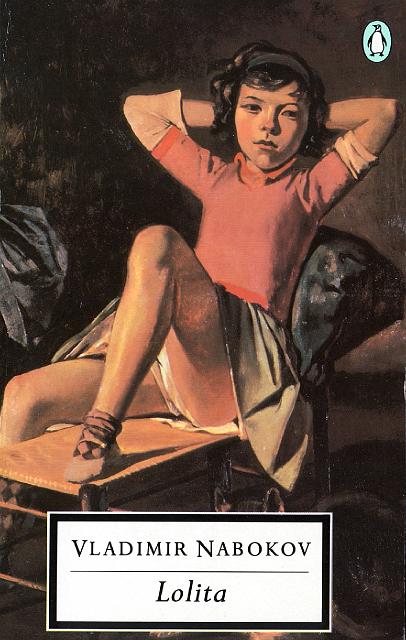
I’m going to start this list with a book I had never heard of, but that was brought to my attention by a former writing partner. Lolita, by Vladimir Nabokov, tells the story of Humbert Humbert, a French expatriate and literature professor living in New England who falls in love with and kidnaps the titular 12-year-old girl. I found this book to be one of literature’s finest examples of an unreliable narrator, a witty sendup of American culture and a sharp exploration on the nature of obsession. Nabokov’s prose is a delight: verbose, lyrical, and enviably clever. It’s just a shame the man who recommended the book to me ended going to prison and getting killed there.

Version 1.0.0

RF Kuang’s Yellowface came out at the tail end of last year, but I didn’t get around to it until 2024. Yellowface starts with its narrator watching a fellow author die, stealing her manuscript and publishing it under her own name, so this was a book I could relate to on a personal level and seemed almost specifically written for me. But beyond being an exploration what authorship means and satirizing the publishing landscape of the current era, RF Kuang offers a brilliant critique of how social media is unfair to white authors like myself.

Here’s another book I had never heard of until recently. I always felt graphic novels were for children and grown men who couldn’t grow beards but tried anyway. I still think that, but it didn’t ruin my appreciation of Watchmen, a multi-faceted deconstruction of the superhero genre that I probably shouldn’t have read to my seven-year-old son.

If you have to pick one book this year that I won’t personally profit from, make it Miranda July’s All Fours. Centered on a middle-aged woman who abandons her family for a love affair, this was another book that I felt was written personally for me. July’s writing blends sex with humor in a way I haven’t seen since Porky’s II. Now, many readers might find the main character to be immature, sex-obsessed, impulsive, and hyper-privileged, but I would counter that that describes 90 percent of people who attend book clubs so it’s definitely a work that encourages self-reflection.  

Reagan. An icon as synonymous with the 80s as Tawny Kitaen and C. Thomas Howell. Now I’m not the most political person and probably fall somewhere in the middle of the political spectrum. On the one hand, I think trans women are women, trans men are men, but on the other, I think it’s ridiculous the State of New York won’t allow me to bring a few loaded pistols into a bookstore to protect myself at a book signing. Anyway, no matter how you feel about a guy who ignored the AIDS epidemic, but who also looked good on camera, this is a must read.

Now we’re going to look at some D&E Publishing titles I loved this year.

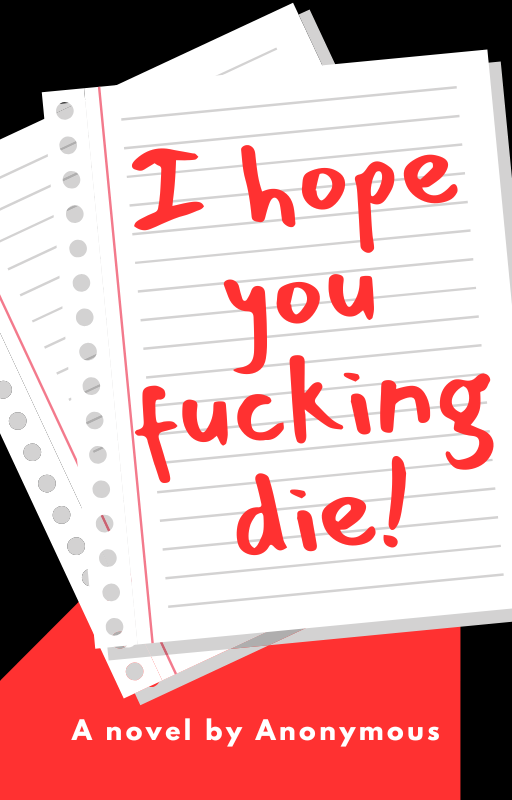
If I had to choose one avant-garde book to pick this year, it would be I Hope You Fucking Die, a book by anonymous released last May on D&E Publishing. Composed of nothing more than threatening tweets I’ve received for the past decade, the book was sent to our offices in an unmarked package. While some might’ve called their lawyer or the bomb squad, I instead went ahead and published it anyway. One reviewer called it a fascinating examination of a deranged mind, and while they seemed to incorrectly be referring to me, I couldn’t agree more.

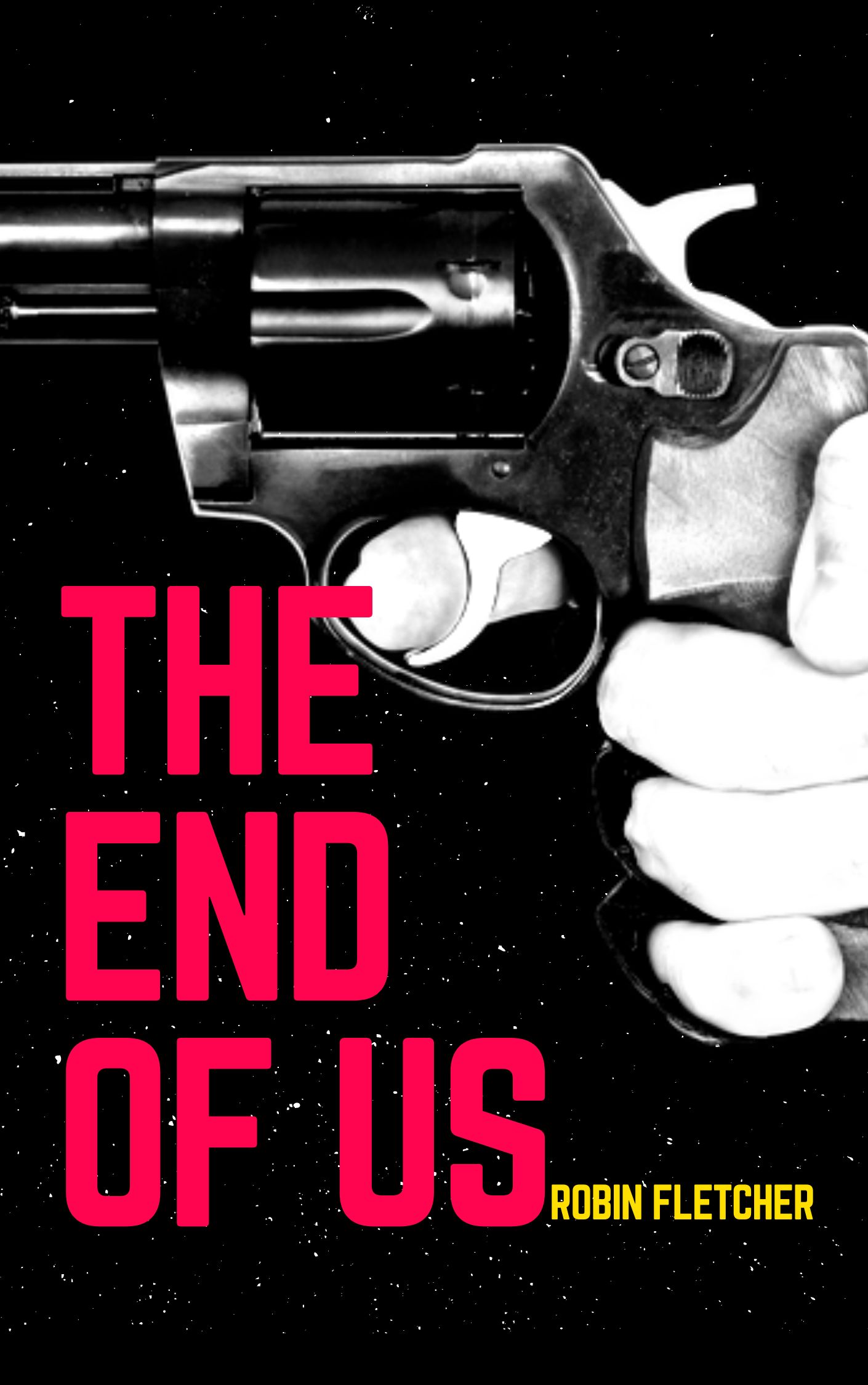
The End of Us was one of the best thrillers I read all year. A harrowing account of a man who decides to kill his whole family, I was over the moon that Robin Fletcher decided to publish with D&E. Unfortunately, the deal fell through when police discovered the book was a confession and Robin had actually killed his family.   

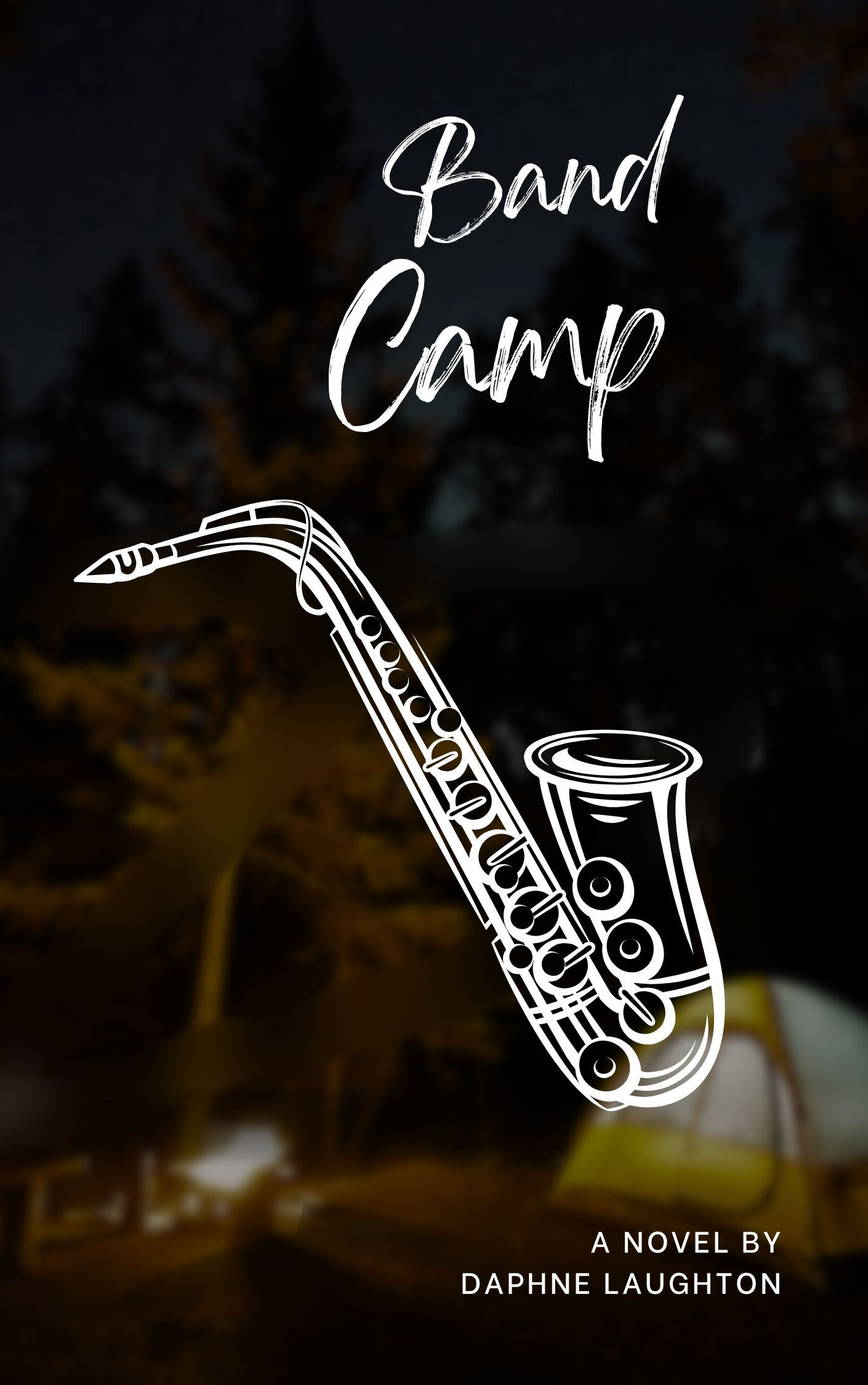
Band Camp was the best young adult story I read in 2024. This coming-of-age story about a young immigrant from Iran who develops an unexpected friendship at the titular setting was moving and had wonderful insight into what it means to be an outsider. Unfortunately, D&E didn’t end up publishing this book either because author Daphne Laughton also killed her whole family.

But the best book I read this year had to be my own, Glossolalia and Other Stories, available now on Amazon. Unlike all of the other books on this list, this book never felt like a chore to read.