What Hiring A Prostitute To Pretend To Be My Ex-Wife Taught Me About Writing Romance Novels

I have some bad news for fans of the channel: John Lazarus is no longer in a relationship. The prostitute I’ve paying to look, act and talk like my second wife has decided she’s no longer willing to provide me with her services.

It’s a tough thing to say goodbye to someone you still love. All those happy memories we shared — dinners together, movie nights, meetings with plastic surgeons and dialect coaches – just bring me pain and sadness now.

Unfortunately, Destiny decided it was time we moved our separate ways. So much time spent pretending to be someone she wasn’t caused her to lose her own sense of identity, it seems. Once she started dreaming as my second wife, she knew it was time to give nursing school another shot.  

As a romance writer, you will similarly construct a romantic identity for your characters in much the way I did for Destiny. In this article, I will show you how the mistakes I made with her are probably very similar to the mistakes many aspiring writers make when attempting their first romance novel. We’ll try to stop glamourizing underage relationships on this edition of Stories’ Matter.

~

So, if you’re new to the channel, I’ll just give you a little bit of background. I have been married three times in my life, but my second wife was definitely my favorite. But that’s not just because my first wife was a serial bigamist who was already married to several other people, or because my third wife was my therapist who used hypnosis and other forms of psychological manipulation to make me fall in love with her.

Cindy was simply a wonderful woman. And I’m not just talking about a pair that defied gravity or the fact that she introduced me to pegging. Cindy taught me how to cook. She convinced me to start my own publishing firm. She was instrumental in removing my dad from his burial plot, selling the plot to fund a down payment for a new house and then dumping him at sea. She was also the only woman I never cheated on.

But unfortunately, this storybook romance wasn’t meant to last. We parted after two short years together. While my love for her remained strong, she didn’t feel the same way. I’ve had over a decade to wonder what went wrong. Perhaps I was too wrapped up in my writing. Perhaps I was too clingy. Perhaps the fact that her new husband was taller, younger, richer and had more friends than me was my undoing.

In any case, that’s not especially important for the purposes of this article. Because I’m actually here to talk about Destiny, the escort I’ve spent the past six months forcing to look, talk and act like Cindy.

Step One: Forcing Chemistry Instead of Building It

This of course relates to our key writing rule: “Show, don’t tell.” You can’t tell your reader that your characters are in love, you need to show them interacting in an organic way that shows them building chemistry.

If you want to write a story about a reformed Islamic terrorist who falls in love with a female Silicon Valley CFO, that’s fine. “Opposites attract” is a great trope. But you’ve got to find a way to make their connection make sense. Perhaps they slowly bond over their love of Colin Firth movies or something.

Looking back, I realize I forced things with Destiny. The speech therapy is one thing, but making her listen to tapes of Cindy’s voicemails while she slept was too much. Maybe I could’ve called her Destiny on Mondays-Fridays and only forced her to pretend to be Cindy on the weekends.

Step Two: Making One Character Passive in the Relationship

Relationships aren’t about one person seizing control and making all of the choices; this isn’t the state of American democracy in 2025.

And this isn’t just a problem with male writers. You’d be surprised how many manuscripts I get from female writers whose male love interest in their novel is basically a dildo with nice hair who also happens to be a ghost.

I now realize I should’ve given Destiny more agency in our relationship. I should’ve let her choose her own restaurants instead of screaming that “Cindy didn’t like Italian.” I should’ve let her buy that boat even though Cindy was terrified of water because her brother drowned when she was five.

Step Three: Writing Relationships Without Commonalities

Your characters need to be together for a reason. Sure, in real life, people might be put together solely because they’re part of the Chinese government’s attempt to create a superrace of excellent basketball players, but your reader wants your couple to bond over something they share.

They shouldn’t be carbon copies of each other, obviously. They don’t have to love the same music or types of porn. But you still need to make that connection. In my novel Above the Rim, it was shared sexual experiences in basketball arenas. In Heartland, it was the shared belief that 9/11 was an inside job.

When I followed her on her days off, I saw that Destiny was into gardening and visiting her family and volunteering at a dog shelter. Those are all things I wouldn’t dream of doing.

Step Four: Not Allowing For Vulnerability

Human beings are frail things. We aren’t like the common salamander; we can’t survive if our head gets cut off.

It’s important that both members of your couple show weakness and fragility. For example, maybe she had both of her hands chopped off by a helicopter. Maybe he’s a control freak who wiretaps everyone, even his best friends and himself.

It’s clear I expected Destiny not to be the perfect woman but the perfect approximation of Cindy. And I expected myself to be perfect as well. One time, I accidentally called her Destiny while we were having sex. This was particularly egregious because I usually only shout my own name during sex. Anyway, I locked myself in a room for a day after watching home movies of Cindy and I.

Step Five: Having Contrived Conflict for the Sake of Conflict

I mean, sure, in real life couples fight. They slap each other. They throw drinks in each other’s faces. They break each other’s garage doors. They sneak devices that emit chirping sounds once every five minutes under their bed and pretend they can’t hear the sound. That’s all fine and normal.

But in your story, conflict must arise organically. Characters need to remain in character.

After Destiny and I settled into our groove and she really got the character of Cindy down, I tried to reenact a fight Cindy and I had several years earlier. The problem was, because of Destiny’s profession, she was cool with taking a cumshot anywhere. So she wasn’t able to channel Cindy’s rage. The next two days of silence and the following “make up” sex just felt so forced.

Step Six: Portraying Abusive Behavior As Romantic

While this doesn’t really relate to my situation with Destiny, you should try to avoid this. I see this way too often in romance novels.

These Mistakes Can Ruin Your Book’s Climax

Do you ever find that you feel like you’re doing very well, but when you get to the end, what you finished with really didn’t pack any punch, it wasn’t what you were hoping for and everyone walks away unsatisfied? Okay, now what about as a writer instead of a sexual partner?

Disappointment is a fact of life most writers have grown accustomed to. We disappoint our bosses by spending most of our time doing edits instead of correctly filing prescription orders. We disappoint our countrymen by crashing from the amphetamines we took for a writing marathon, sleeping 24 hours straight and forgetting to vote. We disappoint our wives by sleeping with our girlfriends, we disappoint our girlfriends by sleeping with our mistresses and we disappoint our mistresses by calling them the names of our wives or girlfriends or sex addiction therapist.

And all of that is okay. In real life, being a disappointment is nothing to be disappointed about. After all, none of this matters and the universe will end in heat death trillions of years from now having not acknowledged our existence at all. However, in your fiction it does matter. You could write a wonderful book with vivid, relatable characters… tense conflict… and lyrical prose, but if the climax disappoints, all of that will be forgotten and you’ll probably be harassed so badly on social media you’ll have to move to a new town.

What a climax really is is you fulfilling a promise to your reader, at least the ones who paid money to read your book. In keeping with this theme, I will slowly tease the story of how I met my second wife and climax with a graphic story of the first time we boned. (I obviously realize you could just skip to that point in the video by clicking, by I will ignore that for now.) We’ll totally not blow it on this edition of Stories’ Matter.

Now, you might assume that the climax of a story is somewhere in the middle, as this terrible graph by Freytag seems to indicate. But as we talked about before on this channel, Freytag was speaking about classic Greek drama and he was mostly concerned with exterminating Polish people. In modern literature, a climax is basically what we think of as the end, where the main problem is resolved and all the tension you’d been building is released. If the sex metaphors make you uncomfortable, you can think of it this way: the climax is the point in the party where everyone’s arrived, the awkwardness has faded and the conversation flows naturally, but before the cops arrive or the guy you didn’t invite pukes on your rug.

Or, if you’re an American, you can also think of the climax as the 90’s in general.

Now, pulling off a good climax can be tricky business. Aside from not having an interesting name, a weak climax is the main reason I reject a prospective author’s manuscript. Here’s some tips to remember.

Mistake 1: Neglecting Character Transformation

Remember, a story isn’t about the things that happen. It’s about how the things that happen change your character. Your climax isn’t about the character defeating the villain. It’s about the character learning that, to defeat evil, you might have to break your moral code and push the villain the wheelchair down the stairs.

When I met the woman who became my second wife, I was much too trusting, which is how I ended up marrying a woman who was a serial bigamist. But as you’ll see, not trusting people is what led me to my second wife.

Mistake 2: Substituting a climax for a cliffhanger

Now, don’t get me wrong. A cliffhanger can be a great thing in real life. Having a workforce that was never sure whether or not they’d receive a Christmas bonus has made for great productivity, I’ve found. But a story needs to be complete.

I don’t have time to read your whole series. In fact, the only things I’ll read are your name, your first sentence, your climax and, time-permitting, your social media feed to make sure there’s nothing about NAMBLA in it.

Today’s story won’t end on any cliffhangers. My second wife and I met at Disney World. I was supposed to take my firstborn son, who was seven at the time, but he fell ill with the flu so I went by myself. She first caught my eye when I noticed her sitting in the back of the flume on Splash Mountain. It was then I knew I needed to have her.  

Mistake 3: Not using a crucible

A climax should feel unavoidable. It should be destiny. It should feel the way I felt when my dad locked me in a room with a hired prostitute at 18 to turn me into a man.

A crucible, in literary terms, is an inescapable situation for your characters. It should be a combination of the choices they’ve made along the way and outside pressures. In the Lord of the Rings, Frodo is constantly compelled to Mordor for the climax. As Tolkien tells it, only Frodo can bring the ring there. In my story, Heartland, the main character is the only one with two hearts and therefore is the only one who can be a donor for the ailing mayor.

With Cindy, things felt unavoidable for a variety of reasons. When I introduced myself, it turned out she actually knew my work, even though I was a just minor success at the time. To add to that, we got put on the It’s a Small World boat alone and the ride broke down.

Mistake 4: Using cheats

Deus ex machina is one of the most common kinds, but there are lots of similar cheats. Basically, any surprise you introduce in the climax must be at least hinted at at some earlier point in the story. Think of the stupid fucking ghost army in Lord of the Rings or Batman’s utility belt in the otherwise logical, measured 1966 version of Batman.

So if I hadn’t mentioned that Cindy was already a fan of mine or hadn’t shown you the John Lazarus massage rod, the following scene would feel cheap.

So anyway, it started with Cindy…

[This section of the article has been removed for violating WordPress guidelines.]

The Secret to Writing a Great Mystery

Death surrounds us everywhere. Of course, how we react to it differs. Children getting blown up half a world away or elderly coworkers not showing up one day usually provokes no reaction. A rich uncle leaving behind an inheritance might inspire a jubilation that better sense tells us to quell. But let’s say you wake up one morning to find a friendly, healthy, financially comfortable neighbor has drowned in your pool. Now that’s intriguing. And intrigue is at the heart of all mystery. We’ll discuss how to become the next Agatha Christie, Raymond Chandler or Dorak Seng on this edition of Stories’ Matter.

Mysteries are some of the most popular books on the market and have been for centuries. But, unlike my high school science teacher, just because they’re popular doesn’t mean they’re easy.

Before we get into the advice, let’s look at some mystery subgenres and their attributes.

First, we have the hardboiled mystery, the province of snoops and private eyes, popularized by writers like Dashiell Hammett and Bill O’Reilly. The protagonists in these stories are famous for cracking wise, having a cynical outlook and having a bad relationship with police. (Which contains some kernel of truth, as it turns out police don’t like snide comments while they fish your dead neighbor out of your pool.)

Cozy mysteries represent the flip side of the coin. These are lighthearted mysteries that take often place in bucolic settings. The Number 1 Ladies Detective Agency and Miss Marple books are some excellent examples. And while these stories often revolve around murder, they usually don’t dwell on gore or scooped out eyeballs or torn scrotums. Like the title suggests, they’re meant to be comfort reading. Murder She Wrote was a famous cozy mystery TV series that was originally meant to have a harder, darker tone, but producers quickly realized test audiences were uncomfortable with the idea of an elderly Angela Lansbury getting sexually assaulted in every episode.

Capers are another popular mystery subgenre. Here we’re often focusing on the other side of the law, and we’re not looking back and asking Whodunit, but looking forward and asking How will they pull it off. Elmore Leonard’s Out of Sight is a highwater mark of the genre, as is my 2016 novella Slight of Hand, about a group of pygmy circus performers who try to steal Stonehenge.

Let’s look at some tips to make our mysteries their most mysterious.

Step One: Develop your sleuth

While the hook of your crime is probably the most important element, your reader won’t stay engaged unless you’ve got an interesting sleuth to follow through the crime-solving process. They don’t have to be all that complicated. Sherlock Holmes, after all, is just a really smart guy who hates Mormons and loves cocaine. But while simple, that also makes him very relatable.

You should also give them a reason for wanting to solve the crime. This could be a personal connection boredom, or it could be political.

Step Two: Plan your crime

Before you start anything though, you need to plan your crime. You need to know who did it, why and what clues they left behind. Don’t worry about it being believable. In the real world people kill because they got cut off in traffic, because God or a dog told them to, or because they didn’t show respect for where the property lines are drawn, so you can give your killer any motive you want.

It’s best to do your research, too. Look up how long it takes a body to decompose. Look up how one might remove traces of DNA from a corpse. Go to your local pharmacy, grab different medications and ask how many will get a 70 kg person to stop breathing. (However, it’s probably not the best idea to do this research if you a suspect under an active police investigation.) But speaking of…

Step Three: Make a list of suspects

Half the fun of a mystery is guessing which from a gallery of vibrant personalities is the real killer. Is it the wife who, though only 90 pounds, easily could’ve brained her husband from behind with a bottle causing him to fall in the pool? Is it the 13-year-old son who purpose fully mislabeled his drug stash in the hope that his dad would take the wrong kind, suffer heart failure and plummet into a neighbor’s pool? Or maybe it’s the person you least suspect, the guy with an airtight alibi, the cocky type who knows he’s smarter than the police and even leaves clues about it on the internet?

Step Four: Choose a unique setting

Post-war urban America and the idyllic British countryside are both fun playgrounds if you want to mess around with the tropes, but I’d go for something less explored. I’ve set mysteries in 30th century incestual generation ships (It’s All Relative), radical Antifa enclaves in middle America (The They/Them Murders), and I even did an espionage mystery set in caveman times (Ook The Spook).

Step Five: Leave trails of clues

It won’t be fun for the reader if they don’t feel like they can play along. Clues should not only provoke the reader, they should ratchet up the tension in the narrative. New developments can both lead the reader closer to the answer while putting the characters in more danger.

For example, imagine you’re writing about a sleuth who thinks she’s found the murderer because the same pills found in the victim’s stomach were found in the neighbor’s medicine cabinet. But when she goes to ask the pharmacist about the medication, the suspect sees her there asking questions. And she later thinks she can see his car following her home and she regrets living alone in a house with such thick walls but she doesn’t see his car on her street so she goes to bed not realizing he learned how to pick locks at the learning annex last year and with her diabetes it would be easy, oh so easy, to make her death look like an accident. 

Why You Keep Getting Exposition Wrong (Blame Freytag!)

Let’s start with a little thought experiment. Would you have sex with any random man? You might be thinking, I’m not sure John, there’s a lot of information I need. I have so many questions. How many partners has he had in the past two years? Will he get needy or is he just looking for a one-time thing? Is he of good breeding? I’m totally not gay so can we just try watching each other jack off so I can prove I’m not gay when I only get a little bit hard?

Of course, I can’t answer all the questions. There has to be a little mystery to keep it spicy as well.

This is a thought experiment I always do when I teach writing classes at the learning annex, and when I bring in Dale to the classroom, I do it to illustrate the importance of exposition. Much like your decision about whether or not you’d bang Dale, your reader won’t follow your characters through your story unless you can answer some key questions about their background, but if you give too much information away, they might get bored and lose track of the narrative. We’ll explore the correct ways to utilize exposition on this edition of Stories’ Matter.

Exposition is a literary device that communicates background information to your reader. Now, according to Freytag, exposition happens at the beginning of your story, but as we’ve talked about before, Freytag was a dumbass who didn’t know shit about shit (and who also thought Polish people could only become proper human beings through German colonization and by forcing them to stop speaking Polish).

Exposition can take place at any time in the story and will often be effective if it’s sprinkled carefully throughout your narrative. There are two kinds of exposition: direct and indirect. Let’s look at an example of direct exposition.

“Once upon a time, there was a little girl named Latifa who lived on 198th Street and Lenox Avenue. Latifa’s grandma lived across town in a rat-infested project with the dope fiends, gangbangers and Mexican pimps, and every day after school, Latifa was responsible for bringing her a fresh brick of cocaine so she and the other old ladies could cut it before it went out on the streets.”

I’ll admit this lacks immediacy. I only did it because I was going for a fairy tale vibe, as this was a retelling of Little Red Riding Hood set in modern-day Harlem that I wrote with one of my black friends (And I only refer to him this way because, in the end, he asked to have his name removed from the project.)

Now let’s listen to an example of indirect exposition from the same story.

“Dan reached into the drawer to find the pistol and touched the spot smeared with Janet’s lipstick. What was that shade—she must’ve mentioned it a dozen times? Mars sunrise, or something like that. Dan grabbed the gun and walked across the empty living room, peeking back as he stepped out into the hall. A year ago this would’ve been a place worth protecting, he told himself.”

This says a lot while keeping the story moving. As I explained in this video, it shows instead of tells. We learn Janet was someone important to him, either a girlfriend or possibly his mom, and we know that she’s no longer in his life, something the emptiness of the apartment clarifies. The subtlety provides a bigger emotional impact as well.

Now, we’re going to look at four different ways to provide exposition in our writing with more samples of my writing, now available for purchase on Amazon.

Example 1: Exposition through conflict

“Sally had planned everything perfectly, tied up every loose end–she even shaved all her head hair and pubes–but still she woke up Thursday morning to the police knocking on her door.”

That’s how I began The They/Them Murders, a thriller about the woke left mob involved in a series of disappearances in the suburbs of Branson, Missouri. Because it’s tied to some immediate action, it doesn’t feel like telling and while it reveals the past, a lot is still shrouded in mystique, which entices the reader. Why did she shave her pubes? Was she sliding naked through some kind of cramped tube and wanted to avoid the hairs getting ripped or pulled out?

Example 2: Exposition through dialogue

“You seem anxious. What’s wrong?” “Oh, it’s nothing. It’s just that I haven’t been in this hospital since my brother died from sepsis.”

That’s from an early scene in Heartland, a coming-of-age story about one teen’s decision to become an organ donor. Dialogue can be one of the most natural ways to reveal backstory. But when you do this, make sure you don’t have people talking about something they both already know, like in… all movies. Find workarounds to this dilemma. Instead of a man explaining how he got his scar to his wife of 20 years, rewrite the scene so he’s explaining it to a prostitute.

Example 3: Exposition through newspaper articles, diary entries, emails and other epistolary devices

“Pa lost the farm today. Said we’s gon move to Arkansas soon as grandpappy funeral get over wit. Can’t say I miss em’ much myself, though.”

From Ode to Adelay, about a rural family struggling through the Great Depression. Devices like these are great ways to get across a lot of background information without it feeling like telling and without the reader losing interest. And you’d be surprised by the vast number of things you can use to convey information. Just take a look around your house: for me, that includes things like horse race results, warning labels for sleep medication, threatening letters to the IRS.

That’s all for this time. Please don’t forget to like and subscribe.

An Easy Way to Come up with Great Book Titles!

Let me ask you a question? Do you think Pride and Prejudice would have been as successful with its original title: First Impressions? What if To Kill a Mockingbird had just been called Atticus? Or if A Clockwork Orange had just been called Alex and the Fantabulous Adventures of the Bowler Boys Brigade?

Titles are some of the hardest things for writers to come up with. In fact, I once wrote a 200-page mystery novel in two weeks and spent the entire next month thinking of a title before settling on The Woman in Red. We’ll look at some ways to speed up the process on this edition of Stories’ Matter.

So, what does a good title need to be? First off, it needs to be unique. Yes, it’s true that you can’t copyright titles, but this is one case where I wouldn’t condone outright plagiarism. Early off in my career, I was struggling to earn some extra cash so I took a popular book at the time and stole its title for my psychological thriller. But not only was The Satanic Verses a bad fit for my novel, it led to a whole other set of problems that I had to deal with.

A good title should also give a tiny glimpse into your style, tone, genre or content of your novel. People should have some idea what the novel is about. A straightforward title like Naked Lunch, for example, lets me know the book is erotic and promotes midday copulation.

Finally, a good title needs to be something you can Google at work. It should be obvious that titles shouldn’t be extremely profane, but it’s worth checking on Urban Dictionary to see if your title is a thing some men call their mistresses or a term for Welsh men who have sex with animals. Unfamiliar with British slang, I learned this the hard way when I titled my 2003 romance after the main character, Minge Jefferson.

Now let’s look at some steps to write better novels.

Step One: Use a character name

Lolita

David Copperfield

Anne Frank

All great works of fiction that were named after their titular character. Names can be evocative and memorable. Or, like coworkers at a company orientation, you might forget them two seconds after you hear them. So if you pick a name, try to pick one that will stick in people’s brains. Naming your book Daryl probably won’t get you a Pulitzer.

Think of names with pleasing sonic qualities or that allude to the classics. Heck, this is even the reason I chose John Lazarus as my pen name.  Well, that and my birth name is the same as one of the worst serial killers in American history.

Step Two: Be vague

Sometimes it’s good to go the other way and establish an aura of mystery with something very broad and simple. Think of something like The Old Man and the Sea or The Road. The simplicity suggests something mythic, something basic in human nature that suits the stories well. Some of my biggest successes have been with titles like these, especially The Boy and Chair.

Step Three: Mention the Setting

Cold Mountain

Last Exit to Brooklyn

Revolutionary Road

These titles already tell you a great deal about the book. If your book has a particular place that’s unique, memorably named and essential to the themes and plot, why not use that? The Butchershop on 92nd Street was probably my best-selling mob story for this reason, even though my publisher insisted it was because we tricked Joe Pesci into endorsing my book at an autograph signing.  

Step Four: Use an online title generator

With these AI tools, all you need to do is upload the complete finished draft of your manuscript, your pen name, genre, ISBN of any other books you’ve written, five books similar to yours, your address, social security number and do a quick retinal scan.

Some great titles I’ve gotten from these AI tools: I Know Where You Live, The Futility of Flesh, 1400 Pounds of Pressure Shatter a Human Skull

Step Five: Alter A Popular Phrase

Finally, one last way to create a catchy title is to take a common phrase and flip it on its head. Writing a book about overfishing in the Caspian Sea? How about A Water Out of Fish? Or how about this? Weather the Under, about a gambling addict who always betting the under on football games.

I have more. Grudge a Bear, about a hunter who becomes paralyzed after being attacked by a grizzly and spends the rest of his life trying to get revenge. Or Easier Done Than Said, about a genius mathematician who has to overcome the challenge of being born with no tongue.

I Tried This Nine-Step Story Writing Formula (and I can’t believe how useful it was)

Lots of writers hate the rigidity of a writing formula. After all, writing should be an organic process, not something measured in steps. You’re not making yellow curry, or performing funeral rites, or attending AA meetings that the judge forced you to attend after puking into the open window of a police cruiser during a wild Presidents’ Day celebration.

But if you want to write a story quickly, and the thought of getting rich and famous and finally being able to abandon your family doesn’t motivate you enough, a good writing formula can be a big help.

This writing system was created by Antonya Nelson, a writer whose work I won’t mention or link to because I don’t believe in other authors getting more attention than me. But take my word for it, she’s a pro who knows her stuff.

Step 1: Write About Something That Happened To You

The first thing you need to do is get words on the page, and there’s no better place to start than your own life. Think of something that would be emotionally resonant. You could write about a priest who molested you, or an uncle who molested you, or the dog you had to put down because you could’ve sworn it somehow was knowingly and purposefully molesting you.

When I used this method, I wrote about my first wife, particularly about how she disappeared shortly after I discovered she was a serial bigamist.

Step 2: Rewrite the Same Story From a Different Point of View

As the counselor in my road rage support group taught me, it’s important to take a step back and see things from other people’s perspectives. This applies just as much to writers.

To most people, it might’ve made sense to tell of my first wife’s bigamy from my perspective. But I realized my disillusionment and heartbreak might be muddied by the fact that I was cheating on her with the woman who would eventually become my second and by far favorite wife. So instead, I wanted to get inside her head and try to explore the psychology of a woman who married others compulsively.

Step 3: Create a Ticking Clock

Stories rely on momentum. In real life, drinking too much on Presidents’ Day might lead to court-ordered community service that derails your efforts to track down your missing wife, but a story can’t have random digressions like these.

A ticking clock not only propels the story forward but also culminates with a climax that readers expect and crave. When I rewrote my story from my wife’s perspective, I gave her a father who was dying of cirrhosis. She had nine months to scrape up enough cash to buy a liver for him on the black market. In real life, I never met Barbara’s family, as she told me they wouldn’t like me because they were racist against the Irish.

Step 4: Introduce Significant Objects

Frodo’s ring. The suitcase in Pulp Fiction. The magic golf club in The Legend of Baggar Vance. Fiction relies on symbols to deepen the meaning of your story.

If you’re lucky, this symbol might already be present in your narrative. But you also want to avoid cliches. Something like an engagement ring would probably come across as tacky. Luckily for me, Barbara and I never exchanged them as we’d gotten married so quickly we both forgot. So instead, I chose a special duffel bag in which she kept all her different fake IDs and cash and wigs.

Step 5: Establish a Transitional Situation

Sometimes this is easy to forget as many of us go to work, write and watch YouTube every single day until we die, but fiction depends on change. Your character must have some significant shift in their life or situation.

For my story, that was easy. It was the moment Barbara decided to leave me. Of course, I had to change the circumstances a bit. In the story, Barbara sneaks up behind me and bashes me on the head when I find the duffel bag in the closet and when I come to, she’s gone. In real life, I discovered Barbara missing after returning from an erotic three-day holiday getaway with my soon-to-be second wife at Disney World.

Step 6: Integrate a World Event

You can do this to be symbolic, to anchor your story in a way that’s more relatable to readers or to help market it.

I played around with a few ideas as I was editing. I first thought about setting it during the French Revolution, for example, but abandoned that idea when I remembered that cell phones didn’t exist then. Instead, to underline the sense of hidden intent and double identities, I set the story during the final season of Hannah Montana.

Step 7: Develop Binary Forces

Jocks vs. Nerds. Snobs vs. Slobs. Shiites vs. Sunnis. All classic rivalries that make for compelling drama and drive the narrative.

In my story, there was already a clear binary. Man vs. Woman. But I wanted to go a bit deeper than that. In real life, I didn’t know Barbara all that well, or at all, really, it turned out. I mean, she said she liked Shakespeare and tennis and hardcore porn just like I did, but I realized these commonalities were probably just part of the con, a way to worm her way into my life.

Anyway, in my story, I established a second binary by having her be in favor of the Many Worlds interpretation of quantum mechanics while the husband was partial to the Copenhagen interpretation that insists of wave function collapse after measurement takes place.

Step 8: I actually don’t remember step 8

Step 9: Embrace Experimentation

This is usually the point where I tell you to ignore everything I just said and do something completely different. And this article will be no exception.

But, you don’t have to throw away a perfectly good story just because it might still be too embarrassingly close to what happened to you in real life. Keep playing around with the format. Write the story as a Yelp review. Write it as something your character brings up on his friend’s dad’s death bed.  

For me, the only thing I did was change the point of view again, this time to the second person. Turns out lots of people are really insecure about their relationships and I was able to play into their anxieties pretty well.

The Best Books I Read in 2024

The holiday season means different things for different people. For some it’s a time of reflection, to make resolutions and promise to stick to only clear liquors from now on. For others, it’s a time of sorrow, knowing that your family will call your bluff this time when you say you’re going to kill yourself.

For me, it’s a time for list making. Not gift lists, mind you. My three wives made me stop giving my children gifts after some of the knock off Furbies I bought one year started several small fires. No, it’s a time for year-end lists, when I can share the best things I experienced in 2024. Fans can go to my blog to read about the best movies, albums and brothels I discovered this year, but to keep this relevant to the channel, we’re just going to focus on books.

This list will contain some 2024 releases, some classics I had never gotten around to, and a lot of books that landed on the D&E label that I think all viewers should consider checking out.

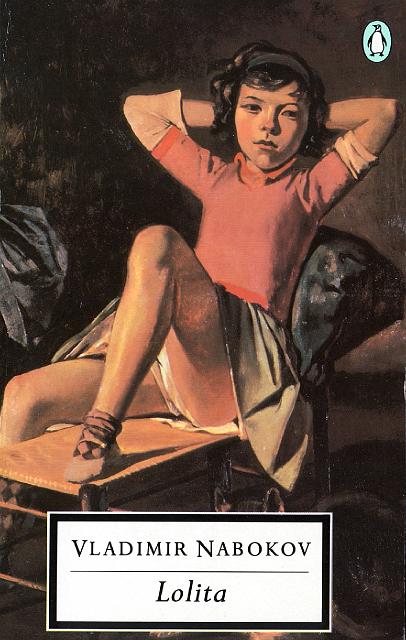
I’m going to start this list with a book I had never heard of, but that was brought to my attention by a former writing partner. Lolita, by Vladimir Nabokov, tells the story of Humbert Humbert, a French expatriate and literature professor living in New England who falls in love with and kidnaps the titular 12-year-old girl. I found this book to be one of literature’s finest examples of an unreliable narrator, a witty sendup of American culture and a sharp exploration on the nature of obsession. Nabokov’s prose is a delight: verbose, lyrical, and enviably clever. It’s just a shame the man who recommended the book to me ended going to prison and getting killed there.

Version 1.0.0

RF Kuang’s Yellowface came out at the tail end of last year, but I didn’t get around to it until 2024. Yellowface starts with its narrator watching a fellow author die, stealing her manuscript and publishing it under her own name, so this was a book I could relate to on a personal level and seemed almost specifically written for me. But beyond being an exploration what authorship means and satirizing the publishing landscape of the current era, RF Kuang offers a brilliant critique of how social media is unfair to white authors like myself.

Here’s another book I had never heard of until recently. I always felt graphic novels were for children and grown men who couldn’t grow beards but tried anyway. I still think that, but it didn’t ruin my appreciation of Watchmen, a multi-faceted deconstruction of the superhero genre that I probably shouldn’t have read to my seven-year-old son.

If you have to pick one book this year that I won’t personally profit from, make it Miranda July’s All Fours. Centered on a middle-aged woman who abandons her family for a love affair, this was another book that I felt was written personally for me. July’s writing blends sex with humor in a way I haven’t seen since Porky’s II. Now, many readers might find the main character to be immature, sex-obsessed, impulsive, and hyper-privileged, but I would counter that that describes 90 percent of people who attend book clubs so it’s definitely a work that encourages self-reflection.  

Reagan. An icon as synonymous with the 80s as Tawny Kitaen and C. Thomas Howell. Now I’m not the most political person and probably fall somewhere in the middle of the political spectrum. On the one hand, I think trans women are women, trans men are men, but on the other, I think it’s ridiculous the State of New York won’t allow me to bring a few loaded pistols into a bookstore to protect myself at a book signing. Anyway, no matter how you feel about a guy who ignored the AIDS epidemic, but who also looked good on camera, this is a must read.

Now we’re going to look at some D&E Publishing titles I loved this year.

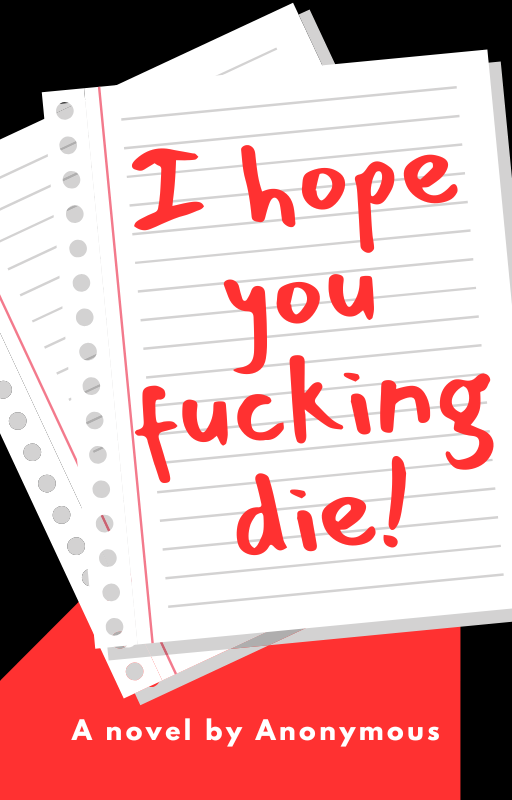
If I had to choose one avant-garde book to pick this year, it would be I Hope You Fucking Die, a book by anonymous released last May on D&E Publishing. Composed of nothing more than threatening tweets I’ve received for the past decade, the book was sent to our offices in an unmarked package. While some might’ve called their lawyer or the bomb squad, I instead went ahead and published it anyway. One reviewer called it a fascinating examination of a deranged mind, and while they seemed to incorrectly be referring to me, I couldn’t agree more.

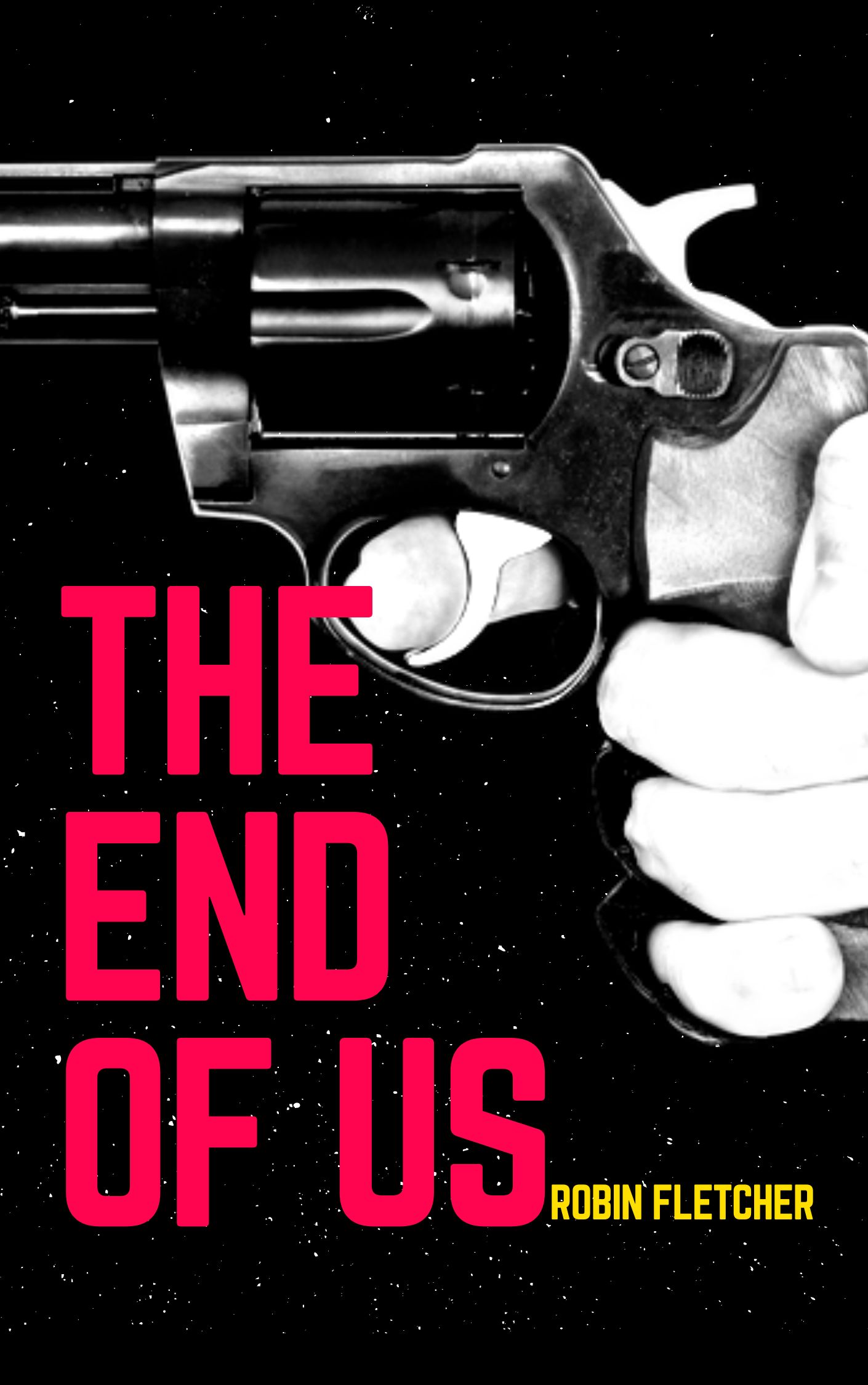
The End of Us was one of the best thrillers I read all year. A harrowing account of a man who decides to kill his whole family, I was over the moon that Robin Fletcher decided to publish with D&E. Unfortunately, the deal fell through when police discovered the book was a confession and Robin had actually killed his family.   

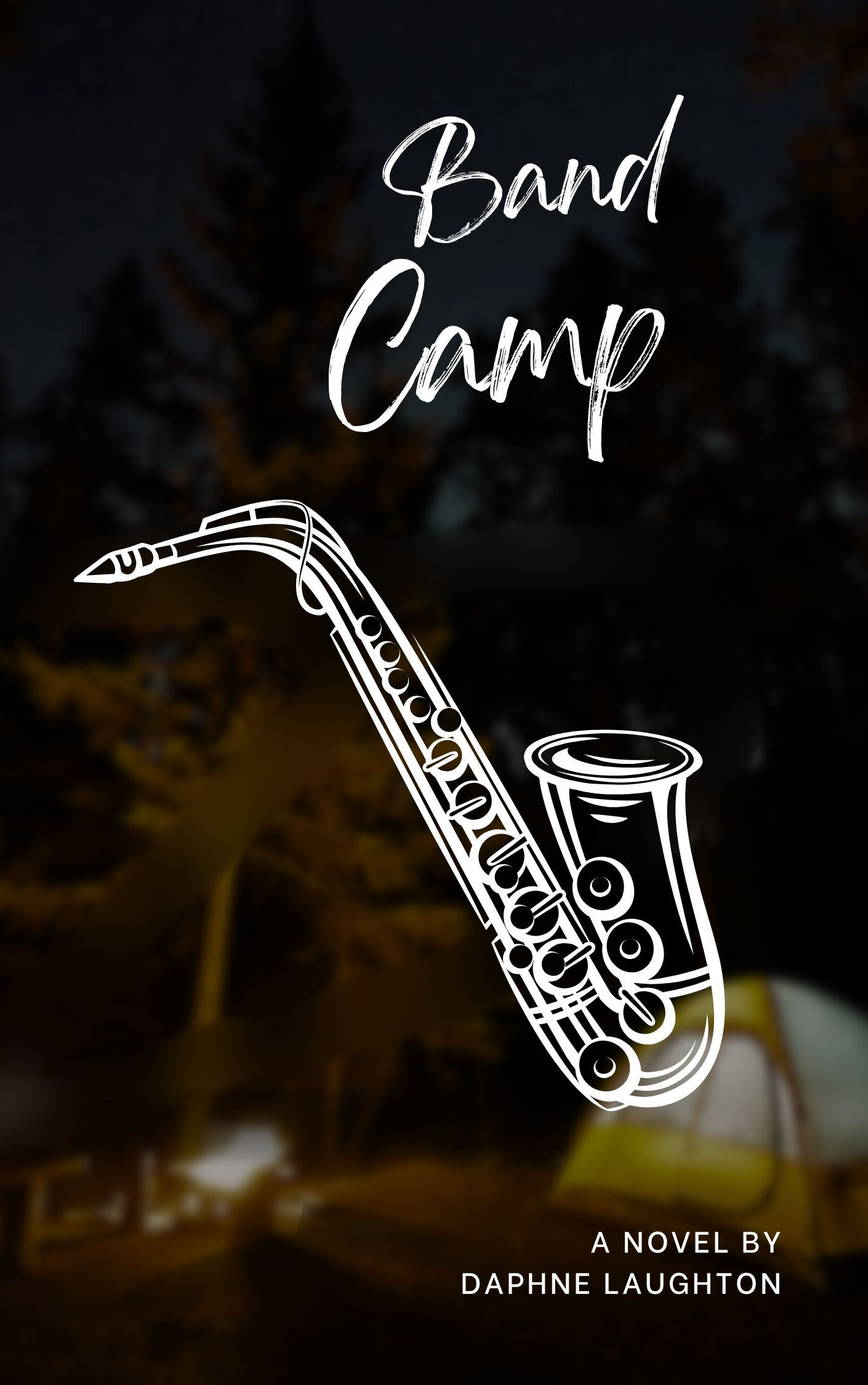
Band Camp was the best young adult story I read in 2024. This coming-of-age story about a young immigrant from Iran who develops an unexpected friendship at the titular setting was moving and had wonderful insight into what it means to be an outsider. Unfortunately, D&E didn’t end up publishing this book either because author Daphne Laughton also killed her whole family.

But the best book I read this year had to be my own, Glossolalia and Other Stories, available now on Amazon. Unlike all of the other books on this list, this book never felt like a chore to read.