Top Tips for Crafting the Perfect Story Ending

Story endings are one of the most things to pull off as a writer. Because of this, it’s going to take me all year to create this video, as I’ll likely have to piece it together little by little.  

Anyway, like sex, a great ending should be an emotional release that all your hard work, all those jogs, all those fasts, all those kegel exercises, culminates in, so to speak.  But unlike sex, a writer needs to at least to attempt to satisfy the person you’re performing for.

It helps to think of some of the great endings of fiction and really analyze why they work so well. The ending of the original Star Wars works so well because it satisfies the audience’s basest, primal bloodlust. We cheer because the hundreds of thousands of sentient beings who are not in our in-group have just suffered an unimaginably painful death.

A great ending should have the following elements: it should resolve your central conflict, it should satisfy the reader, it should illustrate the character’s transformation, and it should take your reader by surprise. To illustrate this point, let’s look at Business As Unusual, a book I just released at the beginning of 2024. The novel follows Tabitha Martin, a young girl trying to make it in the big city while taking care of her sick brother. You can skip ahead if you don’t want any spoilers, but the novel ends with the character’s brother dying.

It solves the central conflict because she’s able to live her life now, it takes the reader by surprise because the brother doesn’t die of cancer but is instead absolutely pancaked by a bus, and it satisfies the reader because Tabitha finally has time to pursue the sexual relationship with her boss that she hinted at by dressing slutty to work.

Now, let’s look at some more general tips that work for all kinds of fiction.

Step One – Know Your Ending Before Writing

You want to take the reader by surprise but not yourself. Wild twists that don’t really make sense just make you look as emotionally unhinged as a drunken secretary who advances on you sexually at an office party even though you barely know each other.

Now, have I written books without knowing the ending in advance? Well, of course. When you write 430 books in 27 years, 13 of those being periods of heavy drug use, both self and externally-administered, things like that are going to happen.

Dawson, a book I wrote as a young man, is a particularly bad example of this. I wrote it without ever knowing who the killer was and in the end I had no choice to make the titular character the killer because his only alibi was that her didn’t remember where he was on the night of the murder.

Step Two – Try Out Different Types of Endings

Despite what many authors might tell you, you don’t have to know your ending in advance. Write three or four different endings. If you find one that surprises you, it may surprise readers even more.  

It can be very liberating as a writer, too. We don’t get to choose different endings in life. We may have let a job opportunity go by and spend the rest of our life regretting it. Or we might spend our days casually flirting with bar patrons, yoga classmates and coworkers with the vain optimism that one will eventually match the charisma and beauty of your second wife, only to have them bore you with the details of their similarly depressing life.

Step Three – Leave Room For Interpretation

This can depend on the kind of story you’re writing. If you’re writing a series, you may want to tease that the villain might’ve survived the final battle. And some very powerful pieces of fiction have ambiguous endings that readers may argue over. Call Me By Your Name and American Psycho are two great examples, as is a recent novel that I’ve had to remove from the market for reason I won’t get into. All I’ll say is that this book ends with the main character finally free to pursue a romance she’s wanted the whole book, but it doesn’t tell us her final decision.

But real life is messy like that. Sometimes people say things that can be interpreted in a variety of ways. Like, imagine your secretary walks into your office at five o’clock and asks, “Would you like me to stay late?” How would you interpret that?

Sure, it could mean, “I am willing to stay late to reduce the amount of work you have to do.” But it could also mean, “I can’t wait until everyone else leaves so it’s just the two of us alone.”

Anyway, as I’ve often told my lawyer, it totally makes sense why two people might interpret that differently.

Step Four – Tie Up All The Loose Ends

Fiction should be neat and tidy, unlike real life. Look, I’m a busy man. I can’t be writing twenty books a year, running a publishing company, doing this web series, all while remembering every conversation I have with every person. This libel stuff… it’s just a desperate plea for attention from someone who could barely be a receptionist, let alone someone who thinks she knows the ins and outs of libel laws as it applies to fiction.

And the sexual harassment stuff is just… I’m not even going to dignify that with a response. I’ve had lots of people come through my office doors and like most bosses I have had sexual relations with a few of them, so that right there already tells you I didn’t target Tiffany specifically. In fact, I was sleeping with two other office assistants while we were in a relationship. So how could there be a quid pro quo if I was getting it from multiple people? Was I playing favorites with all of them? That doesn’t even follow basic logic.

Anyway, back to the libel stuff… if Tiffany had ever listened to my advice, she’d know that’s what a great writer does; he gets inspired by the world around him. Now she wants to take down the company that paid her salary for an entire seven months? Give me a fucking break.

The Anatomy of Your First Chapter

person-using-typewriter-1448709
Photo by Min An from Pexels

Nothing will draw your reader’s attention like a completely perfect first chapter. But complete and utter perfection is easier said than done. In fact, as the head editor of DEPub, I can say with authority that an author’s inability to construct a flawless first chapter is the biggest obstacle to getting published.

So, before we break things down, we need to ask ourselves, “What should the perfect opening do?” Well, it has to introduce the main character and the world in which your story takes place. It has to have a strong, unique hook, an original voice, a well-defined tone perfect for your intended readership, several references to classical literature that are obscure but not too obscure,  something mysterious but also completely clear and understandable, a non-cisgender character, an abortion, a description of a sunset or wedding that makes your own personal memories of those experiences pale in comparison, a person dead or dying of a little known disease, fish, dark humor, nothing callous or insensitive, 2-15 words that aren’t English, and either a galactic spaceship battle or a grounded discussion about motherhood but preferably both.

Now that might sound easy, but once you start writing you’ll definitely notice some key elements are missing. So here are some tips, advice, suggestions, reminders and pointers on how to reduce redundancy and sharpen that first chapter into a useful weapon to plunge into heart of your reader.

Start in media res

With ever-decreasing attention spans, the readers of today need their dopamine fix fast. Recent studies show that readers will decide whether or not to read your book after the first three words. So you’ve got to whip out all your literary might, so to speak, and dangling it front of their face.

That’s why I suggest you start in the middle of your scene. Skip long introductions, skip backstories, skip exposition, skip character description, skip names, skip adverbs, skip nouns, skip punctuation. Start your book with a gunshot to the head. “Bang Bang Bang.” Start your book with cannibalism. “As far back as I can remember, I always wondered what people tasted like.” Start your book with a nonsensical string of expletives. “Fuckin’ piss-ass cocksuckin’ motherfucker.”

Don’t frontload the backstory

Be sparing with your reveals. It’s probably not good to painstakingly detail every year of your character’s life from birth to their present age. Don’t make the same mistake I did and write a hard-boiled crime thriller where the lead detective doesn’t reach puberty until page 46.

Maybe pick one or two key moments from your character’s past that relate to the events unfolding in your first chapter. If your character is eating a sandwich, maybe then would be the time to talk about their high school job as a school cafeteria bully. If your character is in the middle of a high-speed car chase, maybe you should talk about the advice their high school driving instructor gave them.

Opinion, opinion, opinion

Your story is driven by the voice you give your narrator. Original, radical opinions are maybe the best hook you can give your reader. Give your character a refreshing voice of reason, or a scornful voice of hatred.

Look for contrasts. Maybe your radical Islamic terrorist has decided to leave his past behind and open a bakery on the west side. Or maybe hint at a revelation like this: “I hated immigrants my whole life – until the day I realized I was one.”

When nothing else works, change your starting point

Start by asking yourself, “Why am I starting here?” Then ask yourself, “What if I started here?” Then, “No, how about here?” And “No, I think the second one was better. No, wait, which one was the second one?” And finally, “Why am I trying to write this stupid fucking book nobody’s going to read? Just give up you no talent piece of garbage.”

And once you get all that out of your system, try removing your first paragraph and see if that’s better. If that doesn’t work, make your second chapter your first. Then delete every sixth sentence and see what that looks like. Is your story starting to make much less sense and does it seem completely disjointed and nonsensical? If you’ve followed everything I said up until now, your answer should be “no.”

Finally, deliver the burgeoning conflict

There’s a saying I put in all my Powerpoint presentations when I teaching storytelling at the adult learning annex: “Your first chapter doesn’t have to bring the storm, but the storm should be visible on the horizon.” After all the applause, I go on to explain how this is the driving force of all fiction.

Be subtle. Instead of staring with a bank robbery, have the manager of bank security list every single vulnerability he’s noticed. Instead of starting with the death of a father, start with a dream sequence of a near-death experience of an uncle.


Remember, it’s important not to panic. This is a long process. So long as you don’t mind getting rejected for decades, there’s nothing to worry about. I hope this has been helpful.

Seven Secrets To Writing Better Characters

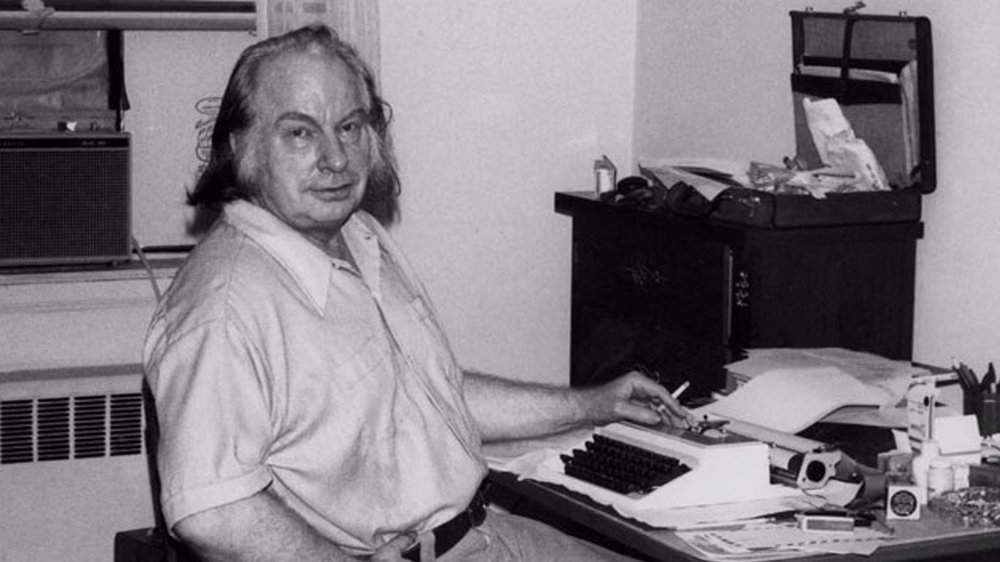
l ron hubbard

Characters are the windows to our story’s soul. They embody our wants, wishes and desires, and we often use them to say the things we can’t in real life without being called a “racist,” “sexist,” or “that guy who has some strange ideas about Israel for someone who’s not very religious.”

The following is a sneak-peak of what you’ll learn in my 75 part, non-refundable online writing course on how to create believable, dynamic characters that aren’t obvious self-inserts.

Give your characters strong opinions

As a writer, there’s a good chance you’re naturally passive. You’re probably afraid to speak in front of others, cower from responsibility and suffer from a complete lack of charisma.

To write resonant characters, however, you’ve got to provide  strong personalities readers will want to follow for the next 300 pages. Giving your character strong opinions is a great way to do so.

For example, I wrote a story about a lonely, American twenty-something unsure of what to do with his life who also thought the holocaust wasn’t such a big deal. I realized it wasn’t working and couldn’t quite understand why. After a good deal of consultation with my beta readers, I decided it would be much better if he denied the holocaust ever happened at all. Now he was somebody who got your attention.

Unpredictability is key

Storytelling is all about character growth, how characters react to their circumstances and how they mould the world around them. Nothing will grip a reader more than a character making an important decision your reader didn’t expect, and if you followed my last piece of advice, sharp changes of mind will be all the more striking.

For example, try making your conformist, browbeaten neighborhood butcher, who has spent his whole life doing what he’s told and making sausage from animal parts, decide one day that he’s going to make sausage out of human parts.

It can go the other way, too. Make your antagonist the good guy. Maybe the liberal philosophy professor decides he isn’t going to give another lecture about why everyone needs to be atheist, quits his job and instead goes to church to pray.

Grudges are another key

This goes part and parcel with strong opinions. Much of our folklore – hell, much of human history – is built upon grudges. I think naturally we as humans are fearful of outsiders, occupying forces and the imminent threat of Sharia law being implementing in our schools.

Your grudges can be professional, political, social or familial. And sometimes, the vaguer the better. A hinted-at grudge is a great way to worldbuild without wasting too much time on exposition. In my Grisham-esque thriller The Subtle Subpoena, we don’t need to be told why the protagonist has it in for the criminal defense firm Abelman, Cohen and Blumenthal – it should be obvious.

Improve physical descriptions by being as specific as possible

Strong, unique physical descriptions are a cornerstone of great character. Read the following sentence: “The cashier had a mole under his right eye.” Decent, but it leaves a lot to the imagination. Here’s a much better version of that sentence: “The cashier had a mole 2.78 centimeters below his right eye.”

Better, right? It’s much easier to picture this way. In the first example, the mole could technically be anywhere under his right eye; it could be next to his mouth, on his neck, on his knee, or even under his left eye.

Character names are more important than anything

Nobody wants to read a book about someone named Jared or Brayden. That’s why it’s important you pick evocative names that follow the three “make it’s”: Make it era-appropriate, alliterative and symbolic.

Names that don’t fit the era they’re set in can be distracting. If you’re writing a historical drama about the Antebellum South, don’t do what I did and name your general Zebulon Geezwax of the Ursa Antilles Cluster.

Also, alliterate every name you can. All great writers and porn stars do it. Names like Candy Cox and Dante Demarcus DeHarrison already tell the reader a lot about the character.

And slather your names in symbolism. Don’t call your character something boring like Joe unless you want him to be an everyman. If you’re writing sci-fi give them a mythic Greek last name and if you’re writing literary fiction give them a mythic Greek first name. Or use obscure color names like Vermillion Dax, Smaragdine Simons, and Burnt Sienna.

The third key is interesting professions

There have already been a lot of books about sea captains, princes, private detectives, humanities professors, hippies and refugees who just whine about everything that’s happened to them. It’s your job as a writer to explore the unexplored, and what better way to do so than by picking a character with a unique profession.

Some ideas: Podcasters who will do anything to uphold the Second Amendment; a Crisis Actor; a movie producer and lobbyist trying to repeal the Second Amendment; a lawyer who happens to be a woman; and the most unsung of all heroes, Israeli politicians.

Finally, you need a moral dilemma

So you’ve got an opinionated, grudge-bearing, unpredictable character with a unique name and profession. But eventually your story will hinge upon the decisions that character makes, and a perfect way to do that is to put their convictions to test, to force them to make uncomfortable choices. This conflict is the essence of all my books (and I assume others as well).

Will your podcaster let Spotify ban his streams on their platform, or will he use his Second Amendment rights to uphold the First? Maybe your character has always been taught men and women are equal? If so, what will he do to stop radical feminists from attacking him on social media?


To learn more about character development, contact us to enroll in our comprehensive online course. It’s just three easy payments of $88.