I Tried This Nine-Step Story Writing Formula (and I can’t believe how useful it was)

Lots of writers hate the rigidity of a writing formula. After all, writing should be an organic process, not something measured in steps. You’re not making yellow curry, or performing funeral rites, or attending AA meetings that the judge forced you to attend after puking into the open window of a police cruiser during a wild Presidents’ Day celebration.

But if you want to write a story quickly, and the thought of getting rich and famous and finally being able to abandon your family doesn’t motivate you enough, a good writing formula can be a big help.

This writing system was created by Antonya Nelson, a writer whose work I won’t mention or link to because I don’t believe in other authors getting more attention than me. But take my word for it, she’s a pro who knows her stuff.

Step 1: Write About Something That Happened To You

The first thing you need to do is get words on the page, and there’s no better place to start than your own life. Think of something that would be emotionally resonant. You could write about a priest who molested you, or an uncle who molested you, or the dog you had to put down because you could’ve sworn it somehow was knowingly and purposefully molesting you.

When I used this method, I wrote about my first wife, particularly about how she disappeared shortly after I discovered she was a serial bigamist.

Step 2: Rewrite the Same Story From a Different Point of View

As the counselor in my road rage support group taught me, it’s important to take a step back and see things from other people’s perspectives. This applies just as much to writers.

To most people, it might’ve made sense to tell of my first wife’s bigamy from my perspective. But I realized my disillusionment and heartbreak might be muddied by the fact that I was cheating on her with the woman who would eventually become my second and by far favorite wife. So instead, I wanted to get inside her head and try to explore the psychology of a woman who married others compulsively.

Step 3: Create a Ticking Clock

Stories rely on momentum. In real life, drinking too much on Presidents’ Day might lead to court-ordered community service that derails your efforts to track down your missing wife, but a story can’t have random digressions like these.

A ticking clock not only propels the story forward but also culminates with a climax that readers expect and crave. When I rewrote my story from my wife’s perspective, I gave her a father who was dying of cirrhosis. She had nine months to scrape up enough cash to buy a liver for him on the black market. In real life, I never met Barbara’s family, as she told me they wouldn’t like me because they were racist against the Irish.

Step 4: Introduce Significant Objects

Frodo’s ring. The suitcase in Pulp Fiction. The magic golf club in The Legend of Baggar Vance. Fiction relies on symbols to deepen the meaning of your story.

If you’re lucky, this symbol might already be present in your narrative. But you also want to avoid cliches. Something like an engagement ring would probably come across as tacky. Luckily for me, Barbara and I never exchanged them as we’d gotten married so quickly we both forgot. So instead, I chose a special duffel bag in which she kept all her different fake IDs and cash and wigs.

Step 5: Establish a Transitional Situation

Sometimes this is easy to forget as many of us go to work, write and watch YouTube every single day until we die, but fiction depends on change. Your character must have some significant shift in their life or situation.

For my story, that was easy. It was the moment Barbara decided to leave me. Of course, I had to change the circumstances a bit. In the story, Barbara sneaks up behind me and bashes me on the head when I find the duffel bag in the closet and when I come to, she’s gone. In real life, I discovered Barbara missing after returning from an erotic three-day holiday getaway with my soon-to-be second wife at Disney World.

Step 6: Integrate a World Event

You can do this to be symbolic, to anchor your story in a way that’s more relatable to readers or to help market it.

I played around with a few ideas as I was editing. I first thought about setting it during the French Revolution, for example, but abandoned that idea when I remembered that cell phones didn’t exist then. Instead, to underline the sense of hidden intent and double identities, I set the story during the final season of Hannah Montana.

Step 7: Develop Binary Forces

Jocks vs. Nerds. Snobs vs. Slobs. Shiites vs. Sunnis. All classic rivalries that make for compelling drama and drive the narrative.

In my story, there was already a clear binary. Man vs. Woman. But I wanted to go a bit deeper than that. In real life, I didn’t know Barbara all that well, or at all, really, it turned out. I mean, she said she liked Shakespeare and tennis and hardcore porn just like I did, but I realized these commonalities were probably just part of the con, a way to worm her way into my life.

Anyway, in my story, I established a second binary by having her be in favor of the Many Worlds interpretation of quantum mechanics while the husband was partial to the Copenhagen interpretation that insists of wave function collapse after measurement takes place.

Step 8: I actually don’t remember step 8

Step 9: Embrace Experimentation

This is usually the point where I tell you to ignore everything I just said and do something completely different. And this article will be no exception.

But, you don’t have to throw away a perfectly good story just because it might still be too embarrassingly close to what happened to you in real life. Keep playing around with the format. Write the story as a Yelp review. Write it as something your character brings up on his friend’s dad’s death bed.  

For me, the only thing I did was change the point of view again, this time to the second person. Turns out lots of people are really insecure about their relationships and I was able to play into their anxieties pretty well.
Top Tips for Crafting the Perfect Story Ending

Story endings are one of the most things to pull off as a writer. Because of this, it’s going to take me all year to create this video, as I’ll likely have to piece it together little by little.  

Anyway, like sex, a great ending should be an emotional release that all your hard work, all those jogs, all those fasts, all those kegel exercises, culminates in, so to speak.  But unlike sex, a writer needs to at least to attempt to satisfy the person you’re performing for.

It helps to think of some of the great endings of fiction and really analyze why they work so well. The ending of the original Star Wars works so well because it satisfies the audience’s basest, primal bloodlust. We cheer because the hundreds of thousands of sentient beings who are not in our in-group have just suffered an unimaginably painful death.

A great ending should have the following elements: it should resolve your central conflict, it should satisfy the reader, it should illustrate the character’s transformation, and it should take your reader by surprise. To illustrate this point, let’s look at Business As Unusual, a book I just released at the beginning of 2024. The novel follows Tabitha Martin, a young girl trying to make it in the big city while taking care of her sick brother. You can skip ahead if you don’t want any spoilers, but the novel ends with the character’s brother dying.

It solves the central conflict because she’s able to live her life now, it takes the reader by surprise because the brother doesn’t die of cancer but is instead absolutely pancaked by a bus, and it satisfies the reader because Tabitha finally has time to pursue the sexual relationship with her boss that she hinted at by dressing slutty to work.

Now, let’s look at some more general tips that work for all kinds of fiction.

Step One – Know Your Ending Before Writing

You want to take the reader by surprise but not yourself. Wild twists that don’t really make sense just make you look as emotionally unhinged as a drunken secretary who advances on you sexually at an office party even though you barely know each other.

Now, have I written books without knowing the ending in advance? Well, of course. When you write 430 books in 27 years, 13 of those being periods of heavy drug use, both self and externally-administered, things like that are going to happen.

Dawson, a book I wrote as a young man, is a particularly bad example of this. I wrote it without ever knowing who the killer was and in the end I had no choice to make the titular character the killer because his only alibi was that her didn’t remember where he was on the night of the murder.

Step Two – Try Out Different Types of Endings

Despite what many authors might tell you, you don’t have to know your ending in advance. Write three or four different endings. If you find one that surprises you, it may surprise readers even more.  

It can be very liberating as a writer, too. We don’t get to choose different endings in life. We may have let a job opportunity go by and spend the rest of our life regretting it. Or we might spend our days casually flirting with bar patrons, yoga classmates and coworkers with the vain optimism that one will eventually match the charisma and beauty of your second wife, only to have them bore you with the details of their similarly depressing life.

Step Three – Leave Room For Interpretation

This can depend on the kind of story you’re writing. If you’re writing a series, you may want to tease that the villain might’ve survived the final battle. And some very powerful pieces of fiction have ambiguous endings that readers may argue over. Call Me By Your Name and American Psycho are two great examples, as is a recent novel that I’ve had to remove from the market for reason I won’t get into. All I’ll say is that this book ends with the main character finally free to pursue a romance she’s wanted the whole book, but it doesn’t tell us her final decision.

But real life is messy like that. Sometimes people say things that can be interpreted in a variety of ways. Like, imagine your secretary walks into your office at five o’clock and asks, “Would you like me to stay late?” How would you interpret that?

Sure, it could mean, “I am willing to stay late to reduce the amount of work you have to do.” But it could also mean, “I can’t wait until everyone else leaves so it’s just the two of us alone.”

Anyway, as I’ve often told my lawyer, it totally makes sense why two people might interpret that differently.

Step Four – Tie Up All The Loose Ends

Fiction should be neat and tidy, unlike real life. Look, I’m a busy man. I can’t be writing twenty books a year, running a publishing company, doing this web series, all while remembering every conversation I have with every person. This libel stuff… it’s just a desperate plea for attention from someone who could barely be a receptionist, let alone someone who thinks she knows the ins and outs of libel laws as it applies to fiction.

And the sexual harassment stuff is just… I’m not even going to dignify that with a response. I’ve had lots of people come through my office doors and like most bosses I have had sexual relations with a few of them, so that right there already tells you I didn’t target Tiffany specifically. In fact, I was sleeping with two other office assistants while we were in a relationship. So how could there be a quid pro quo if I was getting it from multiple people? Was I playing favorites with all of them? That doesn’t even follow basic logic.

Anyway, back to the libel stuff… if Tiffany had ever listened to my advice, she’d know that’s what a great writer does; he gets inspired by the world around him. Now she wants to take down the company that paid her salary for an entire seven months? Give me a fucking break.

Avoid Common Pitfalls in Self-Publishing

Self-publishing: for some, this is a term as depressing as “dinner for one” or  “Milf Manor marathon.” But just because you’ve decided to self-publish, that doesn’t mean you’re a failure or that you wrote the equivalent of a miscarriage.

While I didn’t start out as a self-published author, I have self-published over 150 novels in my long career for a variety of different reasons, from frustration with traditional publishing to wanting more creative freedom to incorrectly assuming any income I made doing so wouldn’t have to go to my first or second wives.

I’ll take you through my journey as a self-published author and discuss some of the pitfalls I encountered so you can avoid them.

Fans of mine will know that, unlike most of the people reading this, I didn’t start out as a self-published author. But while self-publishing wasn’t really an option when I started, that didn’t mean traditional publishing came without its share of headaches.

For starters, my first actual publisher had some weird thoughts about human biology, one of which was they didn’t believe it existed. And my second publisher, the first one that actually had an office and who I assume didn’t think cells were an illusion meant to test humanity’s faith, made me sign a contract that basically got me nothing back in royalties.

It wasn’t until I met Tabitha Cartwright, my mentor and writing partner for over five years, that I started seeing any success as an author. Under her tutelage, I entered the most productive stage of my writing career, though it wasn’t until later that I realized that was because the diet pills she was giving me were actually speed.

Anyway, the next few years after that are kind of a blur, where I produced some of my worst books that I don’t even remember writing. And after settling a lawsuit that gave Tabitha the rights to all the books I’d written in our partnership (while also getting me off the hook for some things I’d rather not mention), I thought it was time to step away from traditional publishing and try the self-publishing route.

This was in 2011: the year Bin Laden was killed and America was warming up to the idea of authors releasing their own books online. The following are some things I learned during the process.

Number 1 – Get A Good Editor.

If there’s one thing I want you to take away from this article, besides the fact that our bodies are, in fact, composed of cells, it’s that you cannot be your own editor. Because the editor I usually worked with wasn’t taking my calls, I thought I could do it on my own. While you do need to edit your work, you need to get at least one other set of eyes on it, if not more. So once I self-published my first novel, the earliest reviews called me out for misspelling the word “baggage” on the first page of the book.

Number 2 – A Book Without A Marketing Plan Is Just The Diary Entry of a Very Sick Individual

Self-publishing is not an outlet for self-expression. If it’s self-expression you’re after, you can, I don’t know, start a blog of your poetry, or post erotic selfies on Tumblr, or storm the Capitol. You have to self-publish with the mindset of a businessperson. And what are all the greatest businesspeople like? Cold, obsessive, ruthless, and so focused on profit that it borders on a psychosis.

Set goals for yourself. Figure out what kind of ads you want. Make schedules and stick to them. You know, do the kinds of things only successful people do and that unsuccessful people never would have possibly thought of.  

Number 3 – Your PR Campaign is a Story in Itself. Start it Before You Finish Your Novel.

You can’t wait until you push that “Publish” button to start finding your audience. Even before you’re done writing, you should give your existing audience some idea of what’s coming. Let them know what it’s about. Let them know the release date. If you’re a YouTuber like me, flash subliminal messages urging them to buy it in your videos. So long as your audience isn’t populated by a high percentage of epileptics, you’ll be fine.

I ignored email lists and newsletters, assuming I’d get by on name recognition alone. But my earliest books were out of print by 2011 and Tabitha Cartwright changed the name on all the books she owned to my legal name (which fans of the channel will know is the same as one of the worst serial killers in American history.) This actually boosted sales, but didn’t do anything for John Lazarus. In any case, I should’ve made a better effort to reach out to long-time fans.

Of course, if you’re a brand-new writer and you don’t have an existing audience, everything I just said was a complete waste of time.

Number 4 – Send Out Advanced Copies to Get Reviews Before Publishing

This is another step you need to take before publishing. And it doesn’t matter if your name is Dan Nobody or Tyra Banks, you need reviews. Lots of them. If you have the money and the connections, get reviews with places like Kirkus and literary magazines. You can go cheaper and use book bloggers. You can go way cheaper and hire the homeless to write reviews and post them on your website.

When I self-published Nap Time, I was so low on money none of these options were available. And when I usually run into a problem like this, I would just lie, write the reviews myself and post them on my website, but I thought I could get by without it. I was wrong.

Number 5 – Act Like a Best Seller

But speaking of blatant fraud, a wise man once said, “Success only comes to those who believe in it.” Projecting confidence, self-promotion and the grind of the hustle that has rendered modern life an existential nightmare are essential to be a successful writer.

Do you know what Neil Gaiman and JK Rowling have in common, besides being shitty human beings? They are always working. When you’re at social functions, when you’re at work, in the online sphere, act like you belong in their club. One day you just might.

Here are five more bits of knowledge I find are essential to all authors considering self-publishing their first book.

Number 6 – Climate Change Won’t Kill Off Enough of the Population Fast Enough to Desaturate the Marketplace

Number 7 – Publishing in Comic Sans Isn’t A Great Idea for a Holocaust Drama

Number 8 – Assume Everyone Is Trying to Scam You. Be Cold And Distant To Everyone in Your Life

Number 9 – Using Child Labor for Your Book Launch Team Might Not Technically Be Illegal, But It’s Still Frowned Upon

Number 10 – Don’t Hold Out Hope On This Book’s Success Filling That Crippling Void In Your Life

The Best Books I Read in 2024

The holiday season means different things for different people. For some it’s a time of reflection, to make resolutions and promise to stick to only clear liquors from now on. For others, it’s a time of sorrow, knowing that your family will call your bluff this time when you say you’re going to kill yourself.

For me, it’s a time for list making. Not gift lists, mind you. My three wives made me stop giving my children gifts after some of the knock off Furbies I bought one year started several small fires. No, it’s a time for year-end lists, when I can share the best things I experienced in 2024. Fans can go to my blog to read about the best movies, albums and brothels I discovered this year, but to keep this relevant to the channel, we’re just going to focus on books.

This list will contain some 2024 releases, some classics I had never gotten around to, and a lot of books that landed on the D&E label that I think all viewers should consider checking out.

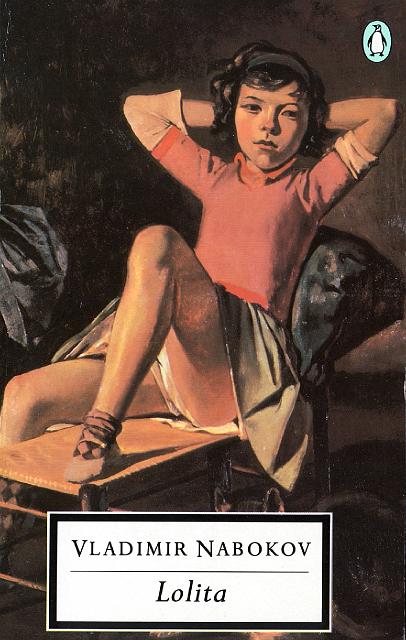
I’m going to start this list with a book I had never heard of, but that was brought to my attention by a former writing partner. Lolita, by Vladimir Nabokov, tells the story of Humbert Humbert, a French expatriate and literature professor living in New England who falls in love with and kidnaps the titular 12-year-old girl. I found this book to be one of literature’s finest examples of an unreliable narrator, a witty sendup of American culture and a sharp exploration on the nature of obsession. Nabokov’s prose is a delight: verbose, lyrical, and enviably clever. It’s just a shame the man who recommended the book to me ended going to prison and getting killed there.

Version 1.0.0

RF Kuang’s Yellowface came out at the tail end of last year, but I didn’t get around to it until 2024. Yellowface starts with its narrator watching a fellow author die, stealing her manuscript and publishing it under her own name, so this was a book I could relate to on a personal level and seemed almost specifically written for me. But beyond being an exploration what authorship means and satirizing the publishing landscape of the current era, RF Kuang offers a brilliant critique of how social media is unfair to white authors like myself.

Here’s another book I had never heard of until recently. I always felt graphic novels were for children and grown men who couldn’t grow beards but tried anyway. I still think that, but it didn’t ruin my appreciation of Watchmen, a multi-faceted deconstruction of the superhero genre that I probably shouldn’t have read to my seven-year-old son.

If you have to pick one book this year that I won’t personally profit from, make it Miranda July’s All Fours. Centered on a middle-aged woman who abandons her family for a love affair, this was another book that I felt was written personally for me. July’s writing blends sex with humor in a way I haven’t seen since Porky’s II. Now, many readers might find the main character to be immature, sex-obsessed, impulsive, and hyper-privileged, but I would counter that that describes 90 percent of people who attend book clubs so it’s definitely a work that encourages self-reflection.  

Reagan. An icon as synonymous with the 80s as Tawny Kitaen and C. Thomas Howell. Now I’m not the most political person and probably fall somewhere in the middle of the political spectrum. On the one hand, I think trans women are women, trans men are men, but on the other, I think it’s ridiculous the State of New York won’t allow me to bring a few loaded pistols into a bookstore to protect myself at a book signing. Anyway, no matter how you feel about a guy who ignored the AIDS epidemic, but who also looked good on camera, this is a must read.

Now we’re going to look at some D&E Publishing titles I loved this year.

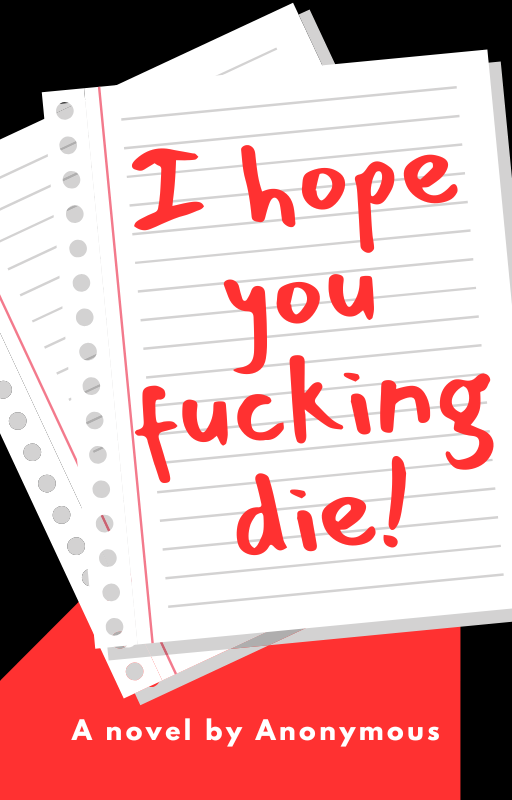
If I had to choose one avant-garde book to pick this year, it would be I Hope You Fucking Die, a book by anonymous released last May on D&E Publishing. Composed of nothing more than threatening tweets I’ve received for the past decade, the book was sent to our offices in an unmarked package. While some might’ve called their lawyer or the bomb squad, I instead went ahead and published it anyway. One reviewer called it a fascinating examination of a deranged mind, and while they seemed to incorrectly be referring to me, I couldn’t agree more.

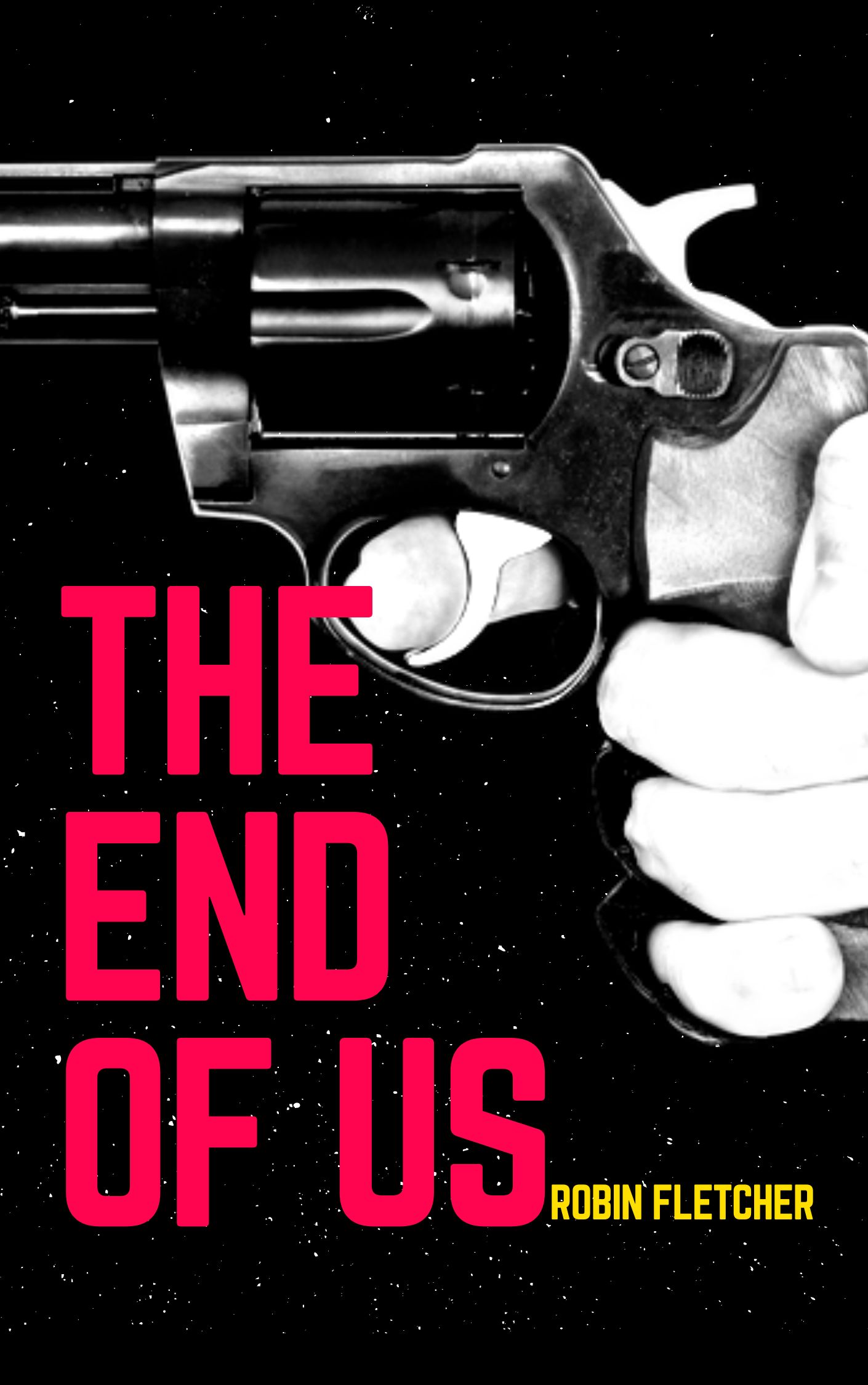
The End of Us was one of the best thrillers I read all year. A harrowing account of a man who decides to kill his whole family, I was over the moon that Robin Fletcher decided to publish with D&E. Unfortunately, the deal fell through when police discovered the book was a confession and Robin had actually killed his family.   

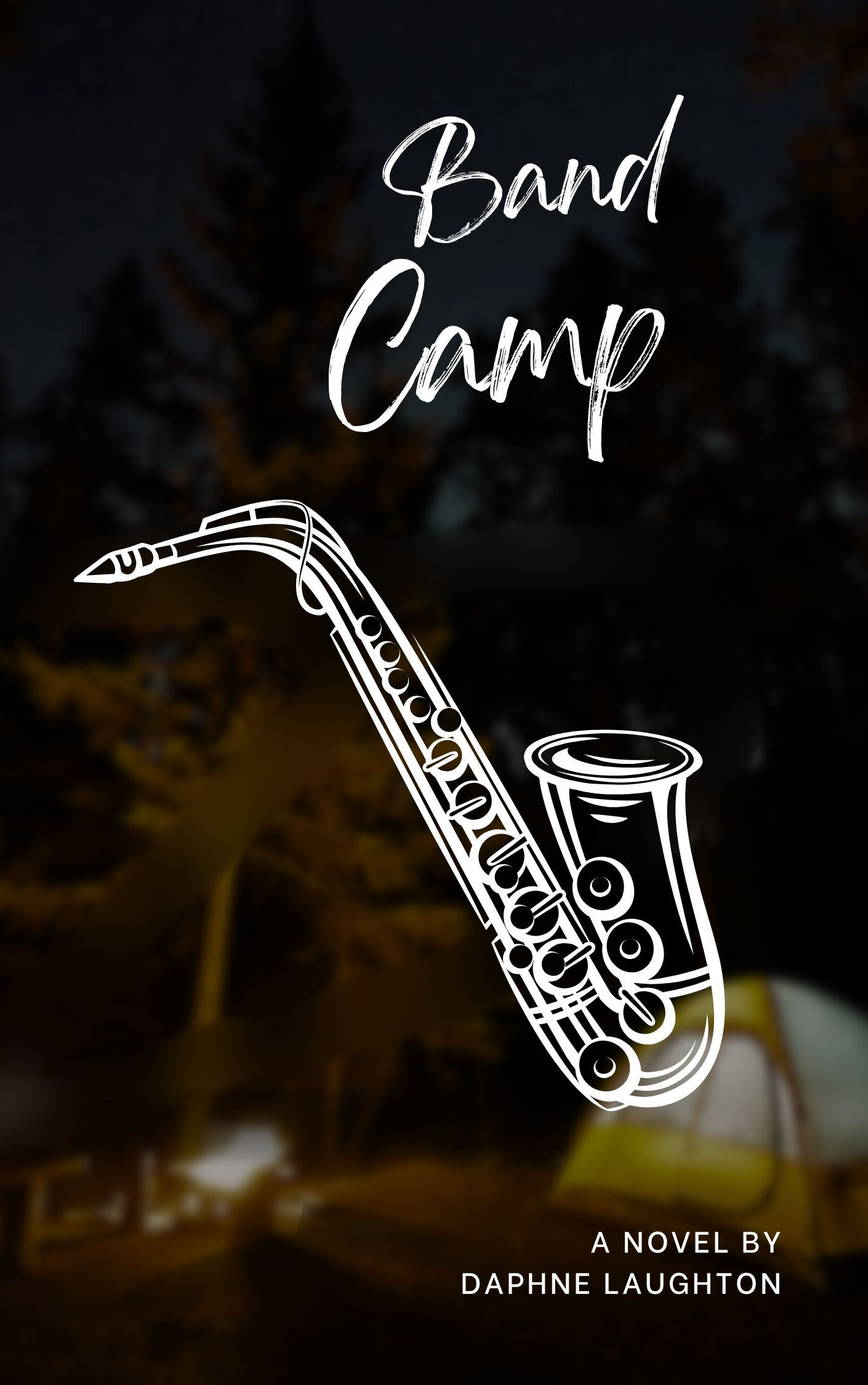
Band Camp was the best young adult story I read in 2024. This coming-of-age story about a young immigrant from Iran who develops an unexpected friendship at the titular setting was moving and had wonderful insight into what it means to be an outsider. Unfortunately, D&E didn’t end up publishing this book either because author Daphne Laughton also killed her whole family.

But the best book I read this year had to be my own, Glossolalia and Other Stories, available now on Amazon. Unlike all of the other books on this list, this book never felt like a chore to read.

The Anatomy of Your First Chapter

person-using-typewriter-1448709
Photo by Min An from Pexels

Nothing will draw your reader’s attention like a completely perfect first chapter. But complete and utter perfection is easier said than done. In fact, as the head editor of DEPub, I can say with authority that an author’s inability to construct a flawless first chapter is the biggest obstacle to getting published.

So, before we break things down, we need to ask ourselves, “What should the perfect opening do?” Well, it has to introduce the main character and the world in which your story takes place. It has to have a strong, unique hook, an original voice, a well-defined tone perfect for your intended readership, several references to classical literature that are obscure but not too obscure,  something mysterious but also completely clear and understandable, a non-cisgender character, an abortion, a description of a sunset or wedding that makes your own personal memories of those experiences pale in comparison, a person dead or dying of a little known disease, fish, dark humor, nothing callous or insensitive, 2-15 words that aren’t English, and either a galactic spaceship battle or a grounded discussion about motherhood but preferably both.

Now that might sound easy, but once you start writing you’ll definitely notice some key elements are missing. So here are some tips, advice, suggestions, reminders and pointers on how to reduce redundancy and sharpen that first chapter into a useful weapon to plunge into heart of your reader.

Start in media res

With ever-decreasing attention spans, the readers of today need their dopamine fix fast. Recent studies show that readers will decide whether or not to read your book after the first three words. So you’ve got to whip out all your literary might, so to speak, and dangling it front of their face.

That’s why I suggest you start in the middle of your scene. Skip long introductions, skip backstories, skip exposition, skip character description, skip names, skip adverbs, skip nouns, skip punctuation. Start your book with a gunshot to the head. “Bang Bang Bang.” Start your book with cannibalism. “As far back as I can remember, I always wondered what people tasted like.” Start your book with a nonsensical string of expletives. “Fuckin’ piss-ass cocksuckin’ motherfucker.”

Don’t frontload the backstory

Be sparing with your reveals. It’s probably not good to painstakingly detail every year of your character’s life from birth to their present age. Don’t make the same mistake I did and write a hard-boiled crime thriller where the lead detective doesn’t reach puberty until page 46.

Maybe pick one or two key moments from your character’s past that relate to the events unfolding in your first chapter. If your character is eating a sandwich, maybe then would be the time to talk about their high school job as a school cafeteria bully. If your character is in the middle of a high-speed car chase, maybe you should talk about the advice their high school driving instructor gave them.

Opinion, opinion, opinion

Your story is driven by the voice you give your narrator. Original, radical opinions are maybe the best hook you can give your reader. Give your character a refreshing voice of reason, or a scornful voice of hatred.

Look for contrasts. Maybe your radical Islamic terrorist has decided to leave his past behind and open a bakery on the west side. Or maybe hint at a revelation like this: “I hated immigrants my whole life – until the day I realized I was one.”

When nothing else works, change your starting point

Start by asking yourself, “Why am I starting here?” Then ask yourself, “What if I started here?” Then, “No, how about here?” And “No, I think the second one was better. No, wait, which one was the second one?” And finally, “Why am I trying to write this stupid fucking book nobody’s going to read? Just give up you no talent piece of garbage.”

And once you get all that out of your system, try removing your first paragraph and see if that’s better. If that doesn’t work, make your second chapter your first. Then delete every sixth sentence and see what that looks like. Is your story starting to make much less sense and does it seem completely disjointed and nonsensical? If you’ve followed everything I said up until now, your answer should be “no.”

Finally, deliver the burgeoning conflict

There’s a saying I put in all my Powerpoint presentations when I teaching storytelling at the adult learning annex: “Your first chapter doesn’t have to bring the storm, but the storm should be visible on the horizon.” After all the applause, I go on to explain how this is the driving force of all fiction.

Be subtle. Instead of staring with a bank robbery, have the manager of bank security list every single vulnerability he’s noticed. Instead of starting with the death of a father, start with a dream sequence of a near-death experience of an uncle.


Remember, it’s important not to panic. This is a long process. So long as you don’t mind getting rejected for decades, there’s nothing to worry about. I hope this has been helpful.

Your Guide To Beta Readers

beta reader

So, after months (or perhaps years) of blood, sweat and tears, you’ve finally finished your book, revised it, self-edited it and have proven to your friends and family that you’re not an unambitious, braindead waste of space slowly counting the days until death.

But hold on there. Before you consider self-publishing or reaching out to literary agents, you’ll want to consider sending your book to beta readers.

What are beta readers?

Beta readers are volunteers who will read your book and provide you with feedback. The name “beta” comes from the word “Betamax,” a popular home video format from the 1980s. People would often share and exchange these “beta” videos in much the way beta reading is the sharing of novels and ideas for improving them.

Beta readers are a good way to get a fresh set of eyes on your work, to address the numerous glaring mistakes, plot holes, poor characterizations, boring passages, cliches, overly graphic sex scenes, and embarrassingly obvious references to your personal life in your work.

It’s important to remember that a beta reader is not an editor. Remember, development editors help you with your overall structure, line editors look at your usage and diction and polish things up to make your manuscript sparkle, proofreaders look at grammar and spelling errors, grammar consultants tell you if you’re using the gerund correctly, book buddies are the shoulder to cry on, and then there’re critique partners, who are basically another word for beta readers but they’re also totally different and I’m not going to explain why,

And if that sounds confusing and overwhelming, well… maybe your family was right about you being a braindead waste of space.

Who makes for a good beta reader?

It will be tempting to ask friends and family to fill this role. But ultimately, these people despise you so much, it will be tough to get a fair, unbiased opinion. (If you’re anything like me, you wrote this book just to spite them for thinking you didn’t have it in you.) So who then?

Your best option is prisoners, if you have the right connections. Every great writer should have at least two or three wardens in his contact list.

Which brings me to my next point: You probably want different beta readers for each project. Anyone too used to you or your writing will have trouble judging you honestly. Fortunately, most prisoners will either be transferred, released, or executed by the time of your next release.

What should you want from your beta reader?

This is very specific to the type of project you’re working on. It will be beneficial to send a list of questions to your beta reader. Here’s some from my most recent project:

  • Are there too many descriptions of female breasts, or not enough?
  • Which female character’s breasts did you most enjoy reading about?
  • Did it feel like the breasts lacked strong character motivation?
  • Was the progression of the breasts throughout the story convincing?
  • Did the dialogue about the breasts sound natural to you (even the parts concerning the fake breasts)?

Through this process, my prisoners were quick to inform me that I’d neglected the breasts far too often. I’d (in a rather sexist way, I’m sad to admit) spent too much time having my female characters talking about the men in their life, instead of celebrating the unique individuality of their own breasts.

How do you implement and handle feedback?

It’s natural, upon hearing any sort of criticism, to want to verbally assault or threaten your beta reader. This is yet another reason why prisoners work so well. A quick scan of their rap sheet will make you think twice about threatening or insulting them. And that’s great because these people are here to help you on your journey and only want to make you a better writer.

And remember, you don’t have to heed all of their advice. Early on, one of my beta readers kept describing my female characters as “unsympathetic.”  While he enjoyed the titillating descriptions of her body, he kept saying he didn’t understand why the reader should care about her. I might’ve taken his advice, too, if I hadn’t learned he was doing four life sentences in Lompoc for strangling prostitutes.

If more than one of your beta readers describes a plot point as confusing, or certain character developments as unearned, then there’s probably something to it. Go through the comments they leave and pick the ones to keep and the ones to discard. If three people say you need to flesh out the part where your character finally reveals the secret about her breast augmentation surgery to her roommate, those are keepers. If you see comments like “Help. Please, I’m not supposed to be in here,” or “When I break out of here, I’m comin’ for you first,” those are the ones you want to discard.

And finally, make sure you politely thank your beta readers for their time.


47 Novels by Chinese-American Women You’ve Got to Read This Month

by Ding Yunyi
If you’re anything like me, you spend your whole day surrounded by books because you’re a research consultant for a publishing firm. But even if you’re not like me, you still probably get through a couple dozen books every month, which means you and I are not so different.
In this column, I’ll be writing about some great, recent novels worth checking out. Each entry will be categorized in some manner, sometimes by genre, sometimes by era, and in this case by the race, gender and attractiveness of the authors.

Best of the Best

Where Has the Time Gone?  by Daphni Jiang
A heartfelt drama about the childless marriage of two time-travelling vampires
The Women of the Chrysanthemum by June Wang
A young floral shop opener is haunted by spirits of the women who were turned into fertilizer and sold to her
How to Survive As A Woman in America by Zhou Ni Meng
One woman’s travelogue through American medical procedures and fitness culture
Behind Closed Eyes by Sasha Connie Chung
A woman discovers a terrible secret about her husband: he’s blind
Journey to the East by Chastity Ding Wo
A farcical comedy about two divorcees’ road trip from Tallahassee to Jacksonville
The Year of the Pig by Dawn Rae Chen
One woman’s quest to go an entire year only eating pork products
Touch of Silk by Chen Rui Dang
A coming-of-age story about a tensile strength evaluator in a Jiangxi textile factory
Riding the Red Dragon by Britney Speers
An erotic novel about a yoga teacher who has sex with dragons
Bootlegs and Knock Offs by Misty Stone
A love story about a big city girl with an affinity for stylish footwear and leaving work early
Fifty Years on the Great Wall by Michael Yu
A middle-aged literature professor called Humbert Humbert is obsessed with the 12-year-old Dolores Haze, with whom he becomes sexually involved after he becomes her stepfather

The Rest

Feminist Lit:

The Boy Next Door by Jackie Lin
The Good Women of China by Donna Evans
The Bad Women of China by Eve Adamson
The Sexy But Otherwise Mediocre Women of China by Fei Yi Mei
China Dolls (6) by Cao Xi Li
China Dolls (11) by Jessica Bangkok
Sense and Sensibility by Autumn Qiu
Harky Porter and the Philanthropist’s Stoat by Jing Kong Rao Ling
The Complete Works of Charlotte Bronte by Chao Xie
Short and Thick by Madeline Jiang
They Called Me Leprosy Face by Jane Qiong
All the Thick Girls by Li Li-Li
Mrs. Rick Shaw by Hai Lin
The Secret Life of a Short and Thick Girl by Lina Fei
Diaries of a High School Dropout (And North Korean Refugee) by Kim Kim
I Am China by Rui Zi Xuan
I Am Also China by Judy Xin
I Am Also China II: Escape to Delpulon by Judy Xin-Rui

Mystery, Suspense, Thriller:

Guangzhou Girl by Melissa Xu
Beijing Bitch by Melissa Xu
Shanghai Skank by Melissa Xu
The Filthy, Slutty Whore of Chongqing by Melissa Xu
Murder Beneath the Orient Express by Janet Chao
Journey to the Murder Beneath the Orient Express by Janet Chao
The House By the Geothermal Hot Spot by Bonnie Fo Fonnie
Green Tee by Ba Nana Fanna Fo Fonnie
I Have Diabetes by Wei Fu Bin Fee

Horror / Fantasy:

Children of Midnight by L’oreal
Zardoz by He Si Si

Z is for Zhizhisidi by Georgia Brown

The Wrong Side of Infinity by Lucy Li

Eat Shit and Die by Ching Chong

The Farmer’s Daughter by Stephanie Wu


The Party Leader’s Daughter by Stephanie Wu
The Speech Pathologist’s Daughter by Stephanie Wu
Dyscalculia by The Female Confucius