Top Tips for Crafting the Perfect Story Ending

Story endings are one of the most things to pull off as a writer. Because of this, it’s going to take me all year to create this video, as I’ll likely have to piece it together little by little.  

Anyway, like sex, a great ending should be an emotional release that all your hard work, all those jogs, all those fasts, all those kegel exercises, culminates in, so to speak.  But unlike sex, a writer needs to at least to attempt to satisfy the person you’re performing for.

It helps to think of some of the great endings of fiction and really analyze why they work so well. The ending of the original Star Wars works so well because it satisfies the audience’s basest, primal bloodlust. We cheer because the hundreds of thousands of sentient beings who are not in our in-group have just suffered an unimaginably painful death.

A great ending should have the following elements: it should resolve your central conflict, it should satisfy the reader, it should illustrate the character’s transformation, and it should take your reader by surprise. To illustrate this point, let’s look at Business As Unusual, a book I just released at the beginning of 2024. The novel follows Tabitha Martin, a young girl trying to make it in the big city while taking care of her sick brother. You can skip ahead if you don’t want any spoilers, but the novel ends with the character’s brother dying.

It solves the central conflict because she’s able to live her life now, it takes the reader by surprise because the brother doesn’t die of cancer but is instead absolutely pancaked by a bus, and it satisfies the reader because Tabitha finally has time to pursue the sexual relationship with her boss that she hinted at by dressing slutty to work.

Now, let’s look at some more general tips that work for all kinds of fiction.

Step One – Know Your Ending Before Writing

You want to take the reader by surprise but not yourself. Wild twists that don’t really make sense just make you look as emotionally unhinged as a drunken secretary who advances on you sexually at an office party even though you barely know each other.

Now, have I written books without knowing the ending in advance? Well, of course. When you write 430 books in 27 years, 13 of those being periods of heavy drug use, both self and externally-administered, things like that are going to happen.

Dawson, a book I wrote as a young man, is a particularly bad example of this. I wrote it without ever knowing who the killer was and in the end I had no choice to make the titular character the killer because his only alibi was that her didn’t remember where he was on the night of the murder.

Step Two – Try Out Different Types of Endings

Despite what many authors might tell you, you don’t have to know your ending in advance. Write three or four different endings. If you find one that surprises you, it may surprise readers even more.  

It can be very liberating as a writer, too. We don’t get to choose different endings in life. We may have let a job opportunity go by and spend the rest of our life regretting it. Or we might spend our days casually flirting with bar patrons, yoga classmates and coworkers with the vain optimism that one will eventually match the charisma and beauty of your second wife, only to have them bore you with the details of their similarly depressing life.

Step Three – Leave Room For Interpretation

This can depend on the kind of story you’re writing. If you’re writing a series, you may want to tease that the villain might’ve survived the final battle. And some very powerful pieces of fiction have ambiguous endings that readers may argue over. Call Me By Your Name and American Psycho are two great examples, as is a recent novel that I’ve had to remove from the market for reason I won’t get into. All I’ll say is that this book ends with the main character finally free to pursue a romance she’s wanted the whole book, but it doesn’t tell us her final decision.

But real life is messy like that. Sometimes people say things that can be interpreted in a variety of ways. Like, imagine your secretary walks into your office at five o’clock and asks, “Would you like me to stay late?” How would you interpret that?

Sure, it could mean, “I am willing to stay late to reduce the amount of work you have to do.” But it could also mean, “I can’t wait until everyone else leaves so it’s just the two of us alone.”

Anyway, as I’ve often told my lawyer, it totally makes sense why two people might interpret that differently.

Step Four – Tie Up All The Loose Ends

Fiction should be neat and tidy, unlike real life. Look, I’m a busy man. I can’t be writing twenty books a year, running a publishing company, doing this web series, all while remembering every conversation I have with every person. This libel stuff… it’s just a desperate plea for attention from someone who could barely be a receptionist, let alone someone who thinks she knows the ins and outs of libel laws as it applies to fiction.

And the sexual harassment stuff is just… I’m not even going to dignify that with a response. I’ve had lots of people come through my office doors and like most bosses I have had sexual relations with a few of them, so that right there already tells you I didn’t target Tiffany specifically. In fact, I was sleeping with two other office assistants while we were in a relationship. So how could there be a quid pro quo if I was getting it from multiple people? Was I playing favorites with all of them? That doesn’t even follow basic logic.

Anyway, back to the libel stuff… if Tiffany had ever listened to my advice, she’d know that’s what a great writer does; he gets inspired by the world around him. Now she wants to take down the company that paid her salary for an entire seven months? Give me a fucking break.
The Art of Travel Writing

Imagine that you’re sitting at a sidewalk cafe in a foreign city. You put your book down. You take a moment to savor the unfamiliar flavors, to smell the unfamiliar aromas, to listen to heated conversations in an unknown language, to watch plainclothes police drag a screaming woman into a panel van. And you think to yourself, somebody ought to write a book about this place. If nothing else, I hope this article shows you that travel writing isn’t just for wives of hedge-fund managers desperate to prove their life isn’t worthless.

So what is travel writing? Travel writing is a loosely-defined genre that includes travelogues, guidebooks, memoirs, travel journalism, snapchats from Phuket, Yelp reviews of Vegas brothels, and letters to the consulate to get you out of Moroccan prison. For the sake of brevity, we won’t focus on those last few.

The first question you might be asking is, Do I actually have to travel to these places to write about them? Of course not. Travel can be expensive, dangerous, and mind-numbingly boring. Hell, I’ve written travel books about Damascus, Port-Au-Prince and Jackson, Mississippi and God knows I’d never be caught dead in any of those places. But if you don’t travel to the place you’re going to write about, you’ll need to put in extra work on Wikipedia, Google street view and watching movies filmed in that location to make sure you get things right.

For the rest of this article, however, we’ll assume you tricked your boss with a fake family death to get enough time off to actually travel to these places.

Step One: Write From a Unique Point of View

Remember, you are writing as a traveler and an outsider to the community you’re visiting. Now, it’s possible far-flung regions like India and China have had talented native writers who’ve written about their homeland, but that’s not what you’re going for. Take your reader into account and think about what value they hope to get from your writing. Do you hope to help them navigate this strange land when they visit? Do you want to share some off-the-beaten path sights away from the large tourist traps? Do you want to tell them where they can purchase a child bride, so they make sure to stay away from that spot?

However, it’s also important to be aware of your biases. It’s best to write in the first-person. Travel writing should have the intimacy of a diary and this way the reader is aware of your subjectivity. So, for example, your readers will understand that your local hosts might not be so open-minded to slaughtering street dogs for meat as you are. 

Step Two: Be Honest

Whether it’s a local dish you found to be disappointing or an old high school you’re certain is being used as a death camp, it’s important to be honest about your experiences as a traveler. Your reader will want those moments of authenticity. Not all trips are sunny beaches, picturesque vistas and nubile masseuses who allow roaming free of charge. Make sure to share those dead ends, scams and overrated traps as well.

In my most successful travelogue about my time in Bahrain, I wrote about a misunderstanding at the local pharmacy. While I asked for Advil, I was instead taken into a backroom and asked to deliver endangered osprey eggs to a government official in Hong Kong. While my publication of the incident means I’ll be executed if I ever return to Bahrain, it did make for a great story. This brings me to my next point.

Step Three: Interact with locals

Your reader, like you, want to absorb as much local flavor as possible and that’s not possible without at least trying to engage with the locals. Even if you don’t speak the language, pay attention to their body language. When I was in France, I couldn’t count how many people would stick their middle finger up to me as I passed them on the street. A local guide said it was their way of complementing my attire.

If you can get a translator or know someone who speaks English, soak up as many stories as you can. In Pakistan I met Hashim, a young man with a great passion for computer engineering. Many things about Hashim struck me as unique: his eagerness to share his life’s details, the way he’d hold my hand in public, or run his finger through my hair, his comfort sleeping next to me, completely in the nude, no modesty about hiding his erection. And though he was forcibly removed from my hotel and I never saw him again, I like to think he lives on in my writing.

Step Four: Stay up-to-date

If there’s one constant in world history, it’s that there are no constants. Borders, kings, queens, and laws regarding drug trafficking change constantly. Czechoslovakia became the Czech Republic which became Czechia which is now just Kia.

You never know when a war might breakout during one of your trips. This is just an unfortunate reality you’ll have to accept. When I was in Yemen in 2014, nobody could’ve predicted this prosperous, stable nation with prompt, efficient room service was moments away from civil war.

But you don’t want to publish something outdated or look out-of-touch. Don’t do what I did and release a whole book about the wonderful bathhouses of Afghanistan in October 2001. So you have two choices: get a publisher who keeps a close eye on the news, or write about places that never change.

The Best Books I Read in 2024

The holiday season means different things for different people. For some it’s a time of reflection, to make resolutions and promise to stick to only clear liquors from now on. For others, it’s a time of sorrow, knowing that your family will call your bluff this time when you say you’re going to kill yourself.

For me, it’s a time for list making. Not gift lists, mind you. My three wives made me stop giving my children gifts after some of the knock off Furbies I bought one year started several small fires. No, it’s a time for year-end lists, when I can share the best things I experienced in 2024. Fans can go to my blog to read about the best movies, albums and brothels I discovered this year, but to keep this relevant to the channel, we’re just going to focus on books.

This list will contain some 2024 releases, some classics I had never gotten around to, and a lot of books that landed on the D&E label that I think all viewers should consider checking out.

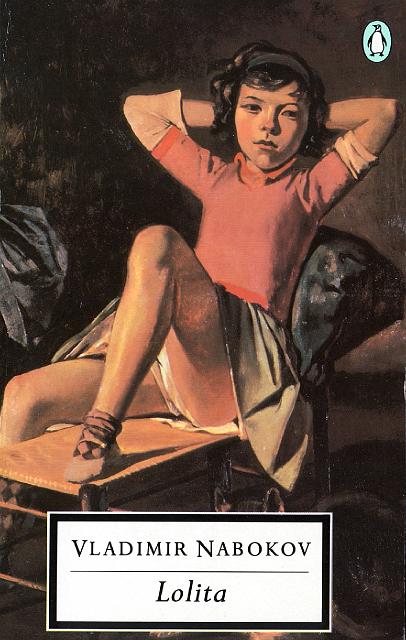
I’m going to start this list with a book I had never heard of, but that was brought to my attention by a former writing partner. Lolita, by Vladimir Nabokov, tells the story of Humbert Humbert, a French expatriate and literature professor living in New England who falls in love with and kidnaps the titular 12-year-old girl. I found this book to be one of literature’s finest examples of an unreliable narrator, a witty sendup of American culture and a sharp exploration on the nature of obsession. Nabokov’s prose is a delight: verbose, lyrical, and enviably clever. It’s just a shame the man who recommended the book to me ended going to prison and getting killed there.

Version 1.0.0

RF Kuang’s Yellowface came out at the tail end of last year, but I didn’t get around to it until 2024. Yellowface starts with its narrator watching a fellow author die, stealing her manuscript and publishing it under her own name, so this was a book I could relate to on a personal level and seemed almost specifically written for me. But beyond being an exploration what authorship means and satirizing the publishing landscape of the current era, RF Kuang offers a brilliant critique of how social media is unfair to white authors like myself.

Here’s another book I had never heard of until recently. I always felt graphic novels were for children and grown men who couldn’t grow beards but tried anyway. I still think that, but it didn’t ruin my appreciation of Watchmen, a multi-faceted deconstruction of the superhero genre that I probably shouldn’t have read to my seven-year-old son.

If you have to pick one book this year that I won’t personally profit from, make it Miranda July’s All Fours. Centered on a middle-aged woman who abandons her family for a love affair, this was another book that I felt was written personally for me. July’s writing blends sex with humor in a way I haven’t seen since Porky’s II. Now, many readers might find the main character to be immature, sex-obsessed, impulsive, and hyper-privileged, but I would counter that that describes 90 percent of people who attend book clubs so it’s definitely a work that encourages self-reflection.  

Reagan. An icon as synonymous with the 80s as Tawny Kitaen and C. Thomas Howell. Now I’m not the most political person and probably fall somewhere in the middle of the political spectrum. On the one hand, I think trans women are women, trans men are men, but on the other, I think it’s ridiculous the State of New York won’t allow me to bring a few loaded pistols into a bookstore to protect myself at a book signing. Anyway, no matter how you feel about a guy who ignored the AIDS epidemic, but who also looked good on camera, this is a must read.

Now we’re going to look at some D&E Publishing titles I loved this year.

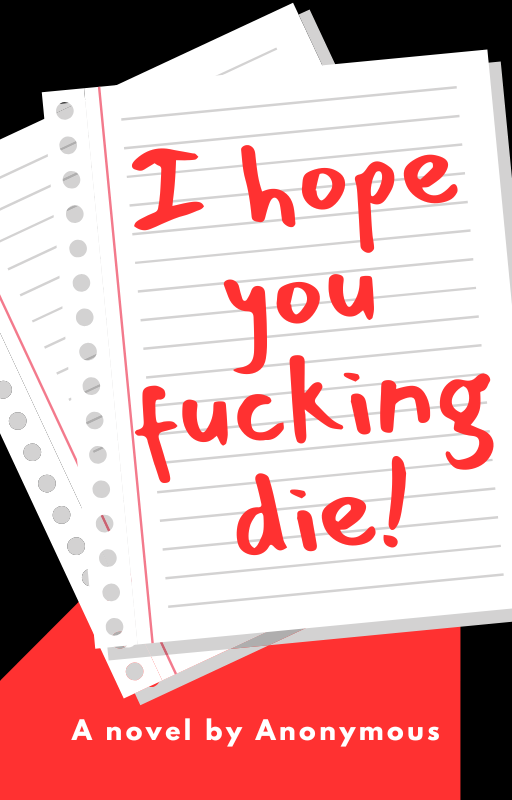
If I had to choose one avant-garde book to pick this year, it would be I Hope You Fucking Die, a book by anonymous released last May on D&E Publishing. Composed of nothing more than threatening tweets I’ve received for the past decade, the book was sent to our offices in an unmarked package. While some might’ve called their lawyer or the bomb squad, I instead went ahead and published it anyway. One reviewer called it a fascinating examination of a deranged mind, and while they seemed to incorrectly be referring to me, I couldn’t agree more.

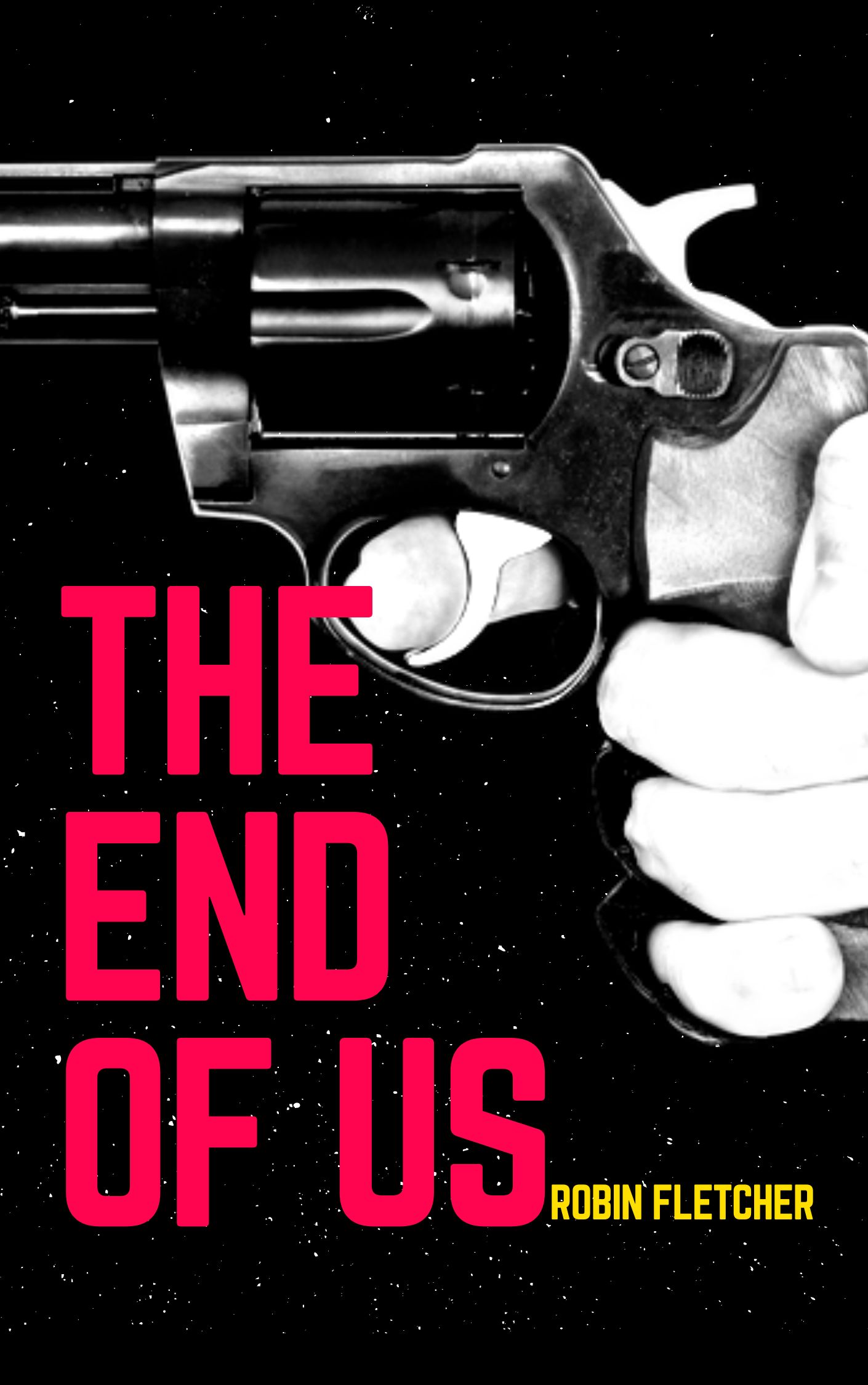
The End of Us was one of the best thrillers I read all year. A harrowing account of a man who decides to kill his whole family, I was over the moon that Robin Fletcher decided to publish with D&E. Unfortunately, the deal fell through when police discovered the book was a confession and Robin had actually killed his family.   

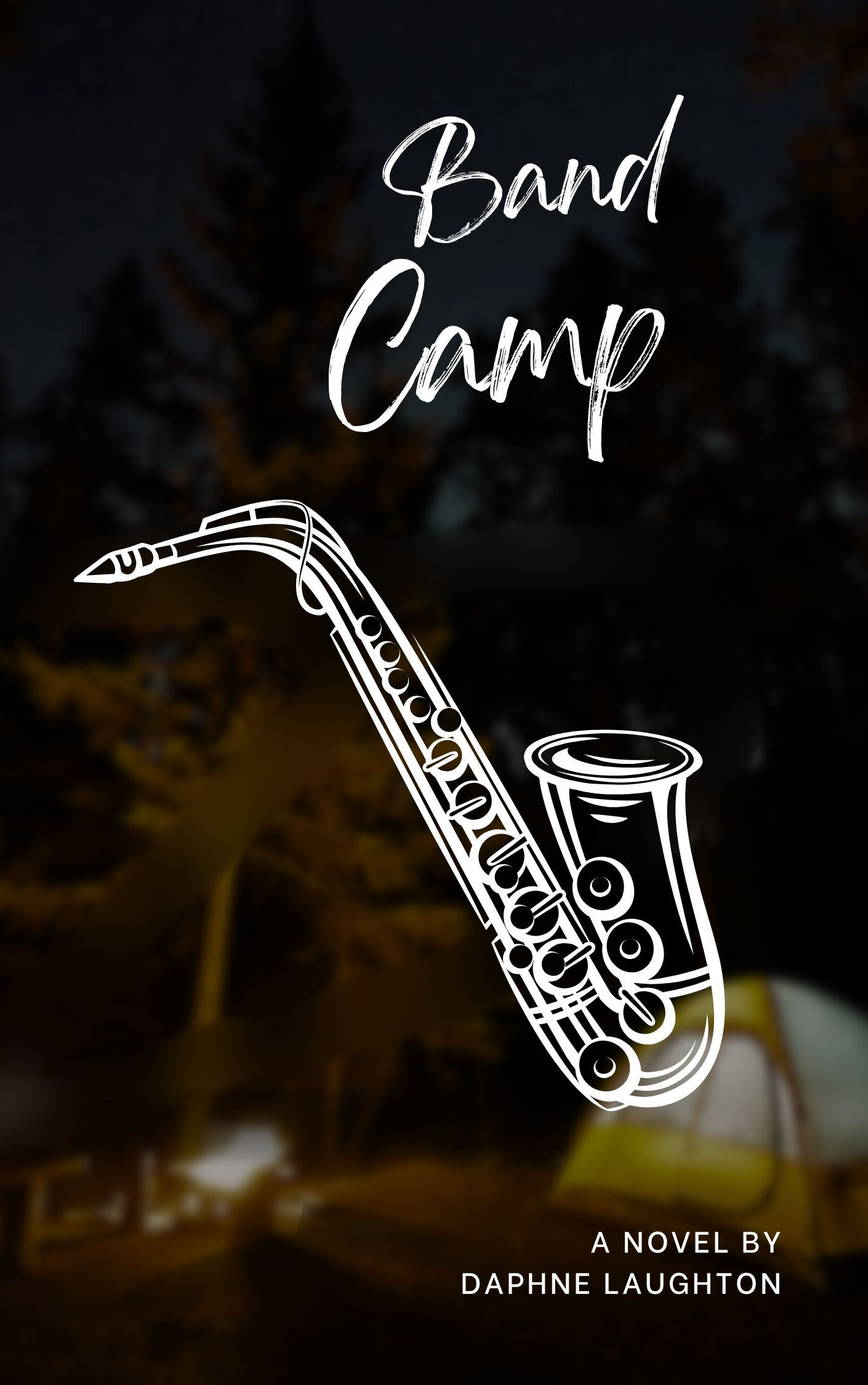
Band Camp was the best young adult story I read in 2024. This coming-of-age story about a young immigrant from Iran who develops an unexpected friendship at the titular setting was moving and had wonderful insight into what it means to be an outsider. Unfortunately, D&E didn’t end up publishing this book either because author Daphne Laughton also killed her whole family.

But the best book I read this year had to be my own, Glossolalia and Other Stories, available now on Amazon. Unlike all of the other books on this list, this book never felt like a chore to read.

The Anatomy of Your First Chapter

person-using-typewriter-1448709
Photo by Min An from Pexels

Nothing will draw your reader’s attention like a completely perfect first chapter. But complete and utter perfection is easier said than done. In fact, as the head editor of DEPub, I can say with authority that an author’s inability to construct a flawless first chapter is the biggest obstacle to getting published.

So, before we break things down, we need to ask ourselves, “What should the perfect opening do?” Well, it has to introduce the main character and the world in which your story takes place. It has to have a strong, unique hook, an original voice, a well-defined tone perfect for your intended readership, several references to classical literature that are obscure but not too obscure,  something mysterious but also completely clear and understandable, a non-cisgender character, an abortion, a description of a sunset or wedding that makes your own personal memories of those experiences pale in comparison, a person dead or dying of a little known disease, fish, dark humor, nothing callous or insensitive, 2-15 words that aren’t English, and either a galactic spaceship battle or a grounded discussion about motherhood but preferably both.

Now that might sound easy, but once you start writing you’ll definitely notice some key elements are missing. So here are some tips, advice, suggestions, reminders and pointers on how to reduce redundancy and sharpen that first chapter into a useful weapon to plunge into heart of your reader.

Start in media res

With ever-decreasing attention spans, the readers of today need their dopamine fix fast. Recent studies show that readers will decide whether or not to read your book after the first three words. So you’ve got to whip out all your literary might, so to speak, and dangling it front of their face.

That’s why I suggest you start in the middle of your scene. Skip long introductions, skip backstories, skip exposition, skip character description, skip names, skip adverbs, skip nouns, skip punctuation. Start your book with a gunshot to the head. “Bang Bang Bang.” Start your book with cannibalism. “As far back as I can remember, I always wondered what people tasted like.” Start your book with a nonsensical string of expletives. “Fuckin’ piss-ass cocksuckin’ motherfucker.”

Don’t frontload the backstory

Be sparing with your reveals. It’s probably not good to painstakingly detail every year of your character’s life from birth to their present age. Don’t make the same mistake I did and write a hard-boiled crime thriller where the lead detective doesn’t reach puberty until page 46.

Maybe pick one or two key moments from your character’s past that relate to the events unfolding in your first chapter. If your character is eating a sandwich, maybe then would be the time to talk about their high school job as a school cafeteria bully. If your character is in the middle of a high-speed car chase, maybe you should talk about the advice their high school driving instructor gave them.

Opinion, opinion, opinion

Your story is driven by the voice you give your narrator. Original, radical opinions are maybe the best hook you can give your reader. Give your character a refreshing voice of reason, or a scornful voice of hatred.

Look for contrasts. Maybe your radical Islamic terrorist has decided to leave his past behind and open a bakery on the west side. Or maybe hint at a revelation like this: “I hated immigrants my whole life – until the day I realized I was one.”

When nothing else works, change your starting point

Start by asking yourself, “Why am I starting here?” Then ask yourself, “What if I started here?” Then, “No, how about here?” And “No, I think the second one was better. No, wait, which one was the second one?” And finally, “Why am I trying to write this stupid fucking book nobody’s going to read? Just give up you no talent piece of garbage.”

And once you get all that out of your system, try removing your first paragraph and see if that’s better. If that doesn’t work, make your second chapter your first. Then delete every sixth sentence and see what that looks like. Is your story starting to make much less sense and does it seem completely disjointed and nonsensical? If you’ve followed everything I said up until now, your answer should be “no.”

Finally, deliver the burgeoning conflict

There’s a saying I put in all my Powerpoint presentations when I teaching storytelling at the adult learning annex: “Your first chapter doesn’t have to bring the storm, but the storm should be visible on the horizon.” After all the applause, I go on to explain how this is the driving force of all fiction.

Be subtle. Instead of staring with a bank robbery, have the manager of bank security list every single vulnerability he’s noticed. Instead of starting with the death of a father, start with a dream sequence of a near-death experience of an uncle.


Remember, it’s important not to panic. This is a long process. So long as you don’t mind getting rejected for decades, there’s nothing to worry about. I hope this has been helpful.

Your Guide To Beta Readers

beta reader

So, after months (or perhaps years) of blood, sweat and tears, you’ve finally finished your book, revised it, self-edited it and have proven to your friends and family that you’re not an unambitious, braindead waste of space slowly counting the days until death.

But hold on there. Before you consider self-publishing or reaching out to literary agents, you’ll want to consider sending your book to beta readers.

What are beta readers?

Beta readers are volunteers who will read your book and provide you with feedback. The name “beta” comes from the word “Betamax,” a popular home video format from the 1980s. People would often share and exchange these “beta” videos in much the way beta reading is the sharing of novels and ideas for improving them.

Beta readers are a good way to get a fresh set of eyes on your work, to address the numerous glaring mistakes, plot holes, poor characterizations, boring passages, cliches, overly graphic sex scenes, and embarrassingly obvious references to your personal life in your work.

It’s important to remember that a beta reader is not an editor. Remember, development editors help you with your overall structure, line editors look at your usage and diction and polish things up to make your manuscript sparkle, proofreaders look at grammar and spelling errors, grammar consultants tell you if you’re using the gerund correctly, book buddies are the shoulder to cry on, and then there’re critique partners, who are basically another word for beta readers but they’re also totally different and I’m not going to explain why,

And if that sounds confusing and overwhelming, well… maybe your family was right about you being a braindead waste of space.

Who makes for a good beta reader?

It will be tempting to ask friends and family to fill this role. But ultimately, these people despise you so much, it will be tough to get a fair, unbiased opinion. (If you’re anything like me, you wrote this book just to spite them for thinking you didn’t have it in you.) So who then?

Your best option is prisoners, if you have the right connections. Every great writer should have at least two or three wardens in his contact list.

Which brings me to my next point: You probably want different beta readers for each project. Anyone too used to you or your writing will have trouble judging you honestly. Fortunately, most prisoners will either be transferred, released, or executed by the time of your next release.

What should you want from your beta reader?

This is very specific to the type of project you’re working on. It will be beneficial to send a list of questions to your beta reader. Here’s some from my most recent project:

  • Are there too many descriptions of female breasts, or not enough?
  • Which female character’s breasts did you most enjoy reading about?
  • Did it feel like the breasts lacked strong character motivation?
  • Was the progression of the breasts throughout the story convincing?
  • Did the dialogue about the breasts sound natural to you (even the parts concerning the fake breasts)?

Through this process, my prisoners were quick to inform me that I’d neglected the breasts far too often. I’d (in a rather sexist way, I’m sad to admit) spent too much time having my female characters talking about the men in their life, instead of celebrating the unique individuality of their own breasts.

How do you implement and handle feedback?

It’s natural, upon hearing any sort of criticism, to want to verbally assault or threaten your beta reader. This is yet another reason why prisoners work so well. A quick scan of their rap sheet will make you think twice about threatening or insulting them. And that’s great because these people are here to help you on your journey and only want to make you a better writer.

And remember, you don’t have to heed all of their advice. Early on, one of my beta readers kept describing my female characters as “unsympathetic.”  While he enjoyed the titillating descriptions of her body, he kept saying he didn’t understand why the reader should care about her. I might’ve taken his advice, too, if I hadn’t learned he was doing four life sentences in Lompoc for strangling prostitutes.

If more than one of your beta readers describes a plot point as confusing, or certain character developments as unearned, then there’s probably something to it. Go through the comments they leave and pick the ones to keep and the ones to discard. If three people say you need to flesh out the part where your character finally reveals the secret about her breast augmentation surgery to her roommate, those are keepers. If you see comments like “Help. Please, I’m not supposed to be in here,” or “When I break out of here, I’m comin’ for you first,” those are the ones you want to discard.

And finally, make sure you politely thank your beta readers for their time.


Five Must-Know Facts About Manuscript Appraisals

by Qate Blanjett

laughing at book

Manuscript appraisal is one of the cornerstones of the publishing process. It can help you become a better writer and turn your book from a piece of trash even your best friends belittle you for to a best-seller. Simply put, manuscript appraisal is when someone reads an early draft of your book and gives you notes on different structural elements of your story, such as pace, tone, plot, and character.

The feedback you’re given can be life-changing. Many people don’t know this, but George R.R. Martin’s A Song of Fire and Ice was originally a series of cookbooks before a manuscript appraiser convinced him to turn in into the medieval fantasy saga we all know and love today.

Below, I ask and answer five questions about manuscript appraising which I think hope illuminate the process to the uninitiated.

Do I need a manuscript appraisal?

This is an important question to ask yourself. The short answer is, if you haven’t written a book and don’t want to be an author, then no. If so, then yes. The long answer is the same thing but written in a more long-winded, roundabout way that someone who does manuscript appraisal can help you make more concise.

What kind of appraisal service should I choose?

With the rise of digital publishing, more and more appraisal services have been sprouting up. But how is an inexperienced author supposed to know who to choose? Generally speaking, it’s more convenient to pick somebody local, but if you have a small budget, outsourcing the job to West Africa is another good option. Still, you have to be careful. Some red flags to look for:

  • Companies that require a blood sample
  • Companies that don’t have or know what a “website” is
  • Companies that offer an appraisal within 24 hours
  • Businesses registered as toothpaste manufacturers for tax purposes
  • Testimonials that refer to the company as a “bunch of shitheads”
  • Companies that only offer appraisals in the form of “would bang” and “would not bang”

How do I know if my manuscript is ready for appraisal?

Ideally, you’d like to have the best possible draft of your work ready when you start to appraise. But more realistically, you’re a really shitty writer, which is why you’re doing the whole appraisal thing in the first place. So just get to where ever you feel is good and let the people you’re paying do the hard work.

What sort of feedback can you expect?

This is a tough one. Because you’re really just tossing a coin. Some appraisers are less professional than others, and will resort to personal attacks and name calling. They’ll say your ideas are “borderline genocidal” and “a symptom of the decline of political debate in this country.” More level-headed appraisers will be more constructive and positive, telling you “you’re one of the ones who gets it” and “not afraid to offend the snowflakes.”

What should I include when sending in my manuscript for appraisal?

Below I’ve compiled a list of the definitely yeses, definitely nos and definitely maybes.

Definitely Yes

  • Your manuscript
  • A cover letter
  • A killer mixtape
  • A short synopsis
  • Some chocolates or other types of sweets
  • An author bio that forgoes some of your more personal beliefs, such as that of your views on miscegenation

Definitely No

  • Hair and most other types of human remains
  • Somebody else’s manuscript
  • A copy of an already published best-seller
  • Erotic photography of the author
  • A personal manifesto that definitely includes your views on miscegenation

Definitely Maybe

  • Deer hair
  • An assortment of jerked meats
  • An author bio that explains your fragile mental state and likelihood to resort to self-harm when faced with criticism
  • Erotic photography of an attractive person
  • Your return address

10 Big Mistakes New Authors Make

by Truitt Collyns

hunt-and-peck-2

1. Limiting your marketing venues

With the rise of digital platforms most new authors know to take advantage of online social media marketing (Twitter, Facebook, Pinterest, Breitbart), but most stop there. And in doing so, you prevent yourself from reaching so many key demographics: the elderly, Luddites, obese people with fingers too fat to type, the poor, convicts without access to electronics, people who never really considered owning a phone or computer, or even those who prefer spending time outdoors. But fortunately, there’s many other marketing avenues available even to the most inexperienced authors that will give your work the necessary exposure. Try, for example, taking a printed copy of your book to your local library and reading it loudly in a crowded area. If it’s a comedy, make sure to laugh boisterously at your own jokes, and if it’s horror, scream during the most intense sections. If time is not a factor for you, consider transcribing your first few chapters in chalk on the sidewalk, preferably in your town’s highest foot traffic areas. And if money is not a factor, skywriting is another option.

2. Writing for fun

Simply put, writing is a job, no different than being a doctor, plumber or general secretary of the United Nations. And just like those jobs, it’s a soul-crushing, mind-numbing endeavor that will make you question the purpose of your existence daily. And although if you have the talent and put in the hard work it’s likely to pay more than any of those jobs, it’s still not something anyone would consider fun. So if you’re going to quit your day job to write full time, make sure you’re doing it for the money and fame and not because you think it’ll be easier and more relaxing than teaching autistic children how to read.

3. Getting a professional book cover

You’ve all heard the maxim “Don’t judge a book by its cover.” It’s one of the first things they teach you in school. That’s right: Even little children know that you’ve got to look inside a book to know if it’s worth reading. Yet new authors will pay hundreds of dollars to graphic artists to design a book cover, when that money could be spent on more important things, like food stamps, alimony or insulin.

4. Forgetting to cultivate your image

Just like musicians and actors, authors aren’t really selling their books – they’re selling themselves. Experts say that after the title and the first chapter, the most important part of your book is the author photo. Readers want to relate to the people telling them stories. Do you think Stephen King would be nearly as popular as he is if he didn’t inspire people by showing them that even hideously ugly people could attain fame and fortune? And what’s more likely: that people like Dan Brown for his sharp blazer/sweater combos, or for his writing? And JK Rowling showed millions around the world that you could be a successful author and a woman.

5. Disregarding the competition

Most new authors feel their work can succeed on its own merits. They tell themselves that so long as my story is well-written and people can relate to it, I’ll have done my job. But real authors know how cutthroat this industry is. To get ahead, you’ve got to be willing to go on the offense. Let’s say I’m a prospective buyer and I’m looking for a new sci-fi adventure story. Am I just going to pick a book at random? More likely, I’ll choose work by an author who doesn’t support ISIS, or whose writing doesn’t “suck a bag of dongs.” People forget Robert Ludlum rose to prominence after publicly decrying Tom Clancy’s use of “underage orphan ghost writers.”

6. Forgetting to tell your publisher to get an IBSN

7. Putting page numbers in the middle of pages instead of at the bottom

8. Not paying tribute to any of the myriad satanic secret societies to which so many agents and editors at New York publishing houses belong

9. Using the “hunt and peck” method of typing.

10. Forgetting that agents and publicists are open to bribes, blackmail and extortion. 

Six Huge Changes Coming to the Publishing Industry in the Next Decade

by Qate Blanjett

book publishing

By the year 2028, scientists project more than half of the earth will be populated by people. Global warming will have escalated to the extent that the five largest corporations will be air conditioning manufacturers. The largest city on the planet will be Tokyo and the largest country will be Africa.

Taking into account current financial, academic and social trends, experts project the publishing industry is likely to see the following turbulent changes to its present platform.

1) Free book rental

Due to increasing unemployment in the Western world, millions will have a surplus of spare time but diminishing disposable income in comparison to previous eras. To resolve this problem, many governments will start subsidizing the publishing industry by purchasing large amounts of books, which will be stored at local facilities for open to the public. Readers can go to these places to not only peruse new and old titles, but also to rent books completely free of charge, provided they are returned within a predesignated period of time.

2) Mental link between authors and readers

In the next few years, we’re likely to see companies offer titles that can be downloaded directly to artificial memory chips already installed in a reader’s cerebral cortex, but by 2028, we’ll go a step further. Readers will simply visit their favorite author’s website and for a nominal fee, will be able to “mind-link” with the author and have the latest installment of their favorite saga telepathically transmitted to them. This will also benefit authors by saving countless hours of typing time.

3) The return of papyrus handscrolls

As we’ve seen in the past decade, despite the convenience and availability of emerging high-tech formats, many readers still prefer traditional forms of media. Therefore, we’re likely to see a 1400 percent increase in the amount of handscrolls sold, and the big publishing houses will devote at least 30 to 50 percent of their workforce to transcribing the latest best sellers on these scrolls.

4) Poorly written books will no longer be profitable

Places like Harvard and MIT are already at work on an algorithm that can tell whether a book is good or not. No longer will popularity and acclaim be subject to the whims of the literary critic or the Amazon reviewer. This algorithm will provide every single piece of literature in existence with an unbiased “value score” determining its literary merit. New novels – by debut self-published authors and firmly-established giants alike – that fail to reach a certain threshold will be removed from bookstores and likely deleted from existence.

5) Harper-Collins will buy a five percent stake in Penguin Random House

This will happen on July 18th, 2023.

6) Publisher and author dynamic likely to change

It’s very likely that, due to increase market pressure and a rise in the number of potential clients, established authors will be pressured heavily by publishers to produce work in a timely manner. In one possible scenario, a representative of the publishing company will inject a load of small nanobots into the author carrying a payload of strychnine in polymer sacs that, should she fail to meet a deadline, will be torn and released into the bloodstream causing instant paralysis and death.

Five Tips for Writers Considering Self-Publishing – And More Tips

by Truitt Collyns 

cash money

Let me set the scene – perhaps it’s a familiar one. You’re sitting at your desk one morning, an open bottle of vodka to one side, a loaded pistol to the other. Your manuscript has just been rejected by your favorite publisher, such as, for example, Dragon Eagle Publishing. But even though a full day of raucous drinking and gunplay should cheer you up, it’s not going to introduce your masterwork to a larger audience.

So perhaps it’s time to consider self-publishing. But first,  reflect on why your story was rejected in the first place. For example, did you know that more than 75 percent of manuscripts Dragon Eagle receives are rejected solely because the author had an ugly-sounding name? Names like Jett, Shadow, Kirisitiana? That’s your aiming for – none of this John, Herman, Virginia or Gertrude nonsense. But it’s not always the name. For example, maybe you had some beta readers – friends, family, co-workers – appraise your work. Did any of them describe it as “bad,” or “not good,” or “not worth publishing?” Have any refused to talk to you since? Well, maybe that’s a sign you still need to make some minor tweaks.

But let’s say you got a great pseudonym, a clever title and a story people can at least feign interest in to maintain your personal relationships. Here’s some tips and information about the world of self-publishing we hope can guide you.

1. Do your research

This is probably the most important step your self-publishing journey because not all ebooks are created equal and not every solution is going to work for your project. Therefore, when you Google “How to Self-Publish My Ebook” don’t just look at the first page of results. This is going to require you to go to all the way to page 6 or 7. (Unless, of course, your settings are different and you don’t just get the standard ten results per page).

2. Your local neighborhood library is a great resource…

… of cheap labor because of its large homeless population. You can have these people write and post reviews to Amazon, Lulu and Goodreads, create ad copy, and even design covers if you hit the jackpot and stumble across a former art major and mother of three whose house recently burned down due to faulty wiring.

3. Promote your book

This one’s pretty self-explanatory. Once your book is ready to upload, you’re going to need to spread the word. So get to it.

4. Remember that books aren’t sandwiches.

This is an important one when considering your audience and their needs. Keep in mind, sandwiches are just something to provide humans with nourishment and energy. Books are also not washing machines, tiny umbrellas you put in cocktails, nice fleece blankets or 2008 Honda CR-V’s. A person who needs those things doesn’t necessarily need your book. (Books are, however, a well-maintained ceiling fan).

5. Consider marrying into a rich family, or waiting until you make your first million, to start publishing

6. Or, failing that, consider all possible corporate tie-ins

7. Make sure you’re using the subjunctive correctly

8. Enter every contest, even if your book doesn’t fit the topic. Trust me, the National Jewish Writing Society doesn’t want to read any more about the Holocaust.

9. Be the smartest, loudest and preferably tallest member of every writing organization you join.

10. You’re almost there.

So you’ve done everything we’ve said. You did your marketing research and promotion, you’ve created a cover, everything’s formatted, you know who your audience is and you feel success is on it way.

Well, you couldn’t be more right, because the next thing you’re going to do is hit the “Cancel Publishing” button, not upload your book to the platform and ask for a refund if you need to. Because you’ve passed the test and shown Dragon Eagle Publishing you’ve got what it takes to make it in this business.

Send everything to us and we’ll get the contract prepped and ready to sign. Welcome to the Dragon Eagle family, Mr. (or possibly Mrs.) Writer. Has a nice ring to it, doesn’t it?


47 Novels by Chinese-American Women You’ve Got to Read This Month

by Ding Yunyi
If you’re anything like me, you spend your whole day surrounded by books because you’re a research consultant for a publishing firm. But even if you’re not like me, you still probably get through a couple dozen books every month, which means you and I are not so different.
In this column, I’ll be writing about some great, recent novels worth checking out. Each entry will be categorized in some manner, sometimes by genre, sometimes by era, and in this case by the race, gender and attractiveness of the authors.

Best of the Best

Where Has the Time Gone?  by Daphni Jiang
A heartfelt drama about the childless marriage of two time-travelling vampires
The Women of the Chrysanthemum by June Wang
A young floral shop opener is haunted by spirits of the women who were turned into fertilizer and sold to her
How to Survive As A Woman in America by Zhou Ni Meng
One woman’s travelogue through American medical procedures and fitness culture
Behind Closed Eyes by Sasha Connie Chung
A woman discovers a terrible secret about her husband: he’s blind
Journey to the East by Chastity Ding Wo
A farcical comedy about two divorcees’ road trip from Tallahassee to Jacksonville
The Year of the Pig by Dawn Rae Chen
One woman’s quest to go an entire year only eating pork products
Touch of Silk by Chen Rui Dang
A coming-of-age story about a tensile strength evaluator in a Jiangxi textile factory
Riding the Red Dragon by Britney Speers
An erotic novel about a yoga teacher who has sex with dragons
Bootlegs and Knock Offs by Misty Stone
A love story about a big city girl with an affinity for stylish footwear and leaving work early
Fifty Years on the Great Wall by Michael Yu
A middle-aged literature professor called Humbert Humbert is obsessed with the 12-year-old Dolores Haze, with whom he becomes sexually involved after he becomes her stepfather

The Rest

Feminist Lit:

The Boy Next Door by Jackie Lin
The Good Women of China by Donna Evans
The Bad Women of China by Eve Adamson
The Sexy But Otherwise Mediocre Women of China by Fei Yi Mei
China Dolls (6) by Cao Xi Li
China Dolls (11) by Jessica Bangkok
Sense and Sensibility by Autumn Qiu
Harky Porter and the Philanthropist’s Stoat by Jing Kong Rao Ling
The Complete Works of Charlotte Bronte by Chao Xie
Short and Thick by Madeline Jiang
They Called Me Leprosy Face by Jane Qiong
All the Thick Girls by Li Li-Li
Mrs. Rick Shaw by Hai Lin
The Secret Life of a Short and Thick Girl by Lina Fei
Diaries of a High School Dropout (And North Korean Refugee) by Kim Kim
I Am China by Rui Zi Xuan
I Am Also China by Judy Xin
I Am Also China II: Escape to Delpulon by Judy Xin-Rui

Mystery, Suspense, Thriller:

Guangzhou Girl by Melissa Xu
Beijing Bitch by Melissa Xu
Shanghai Skank by Melissa Xu
The Filthy, Slutty Whore of Chongqing by Melissa Xu
Murder Beneath the Orient Express by Janet Chao
Journey to the Murder Beneath the Orient Express by Janet Chao
The House By the Geothermal Hot Spot by Bonnie Fo Fonnie
Green Tee by Ba Nana Fanna Fo Fonnie
I Have Diabetes by Wei Fu Bin Fee

Horror / Fantasy:

Children of Midnight by L’oreal
Zardoz by He Si Si

Z is for Zhizhisidi by Georgia Brown

The Wrong Side of Infinity by Lucy Li

Eat Shit and Die by Ching Chong

The Farmer’s Daughter by Stephanie Wu


The Party Leader’s Daughter by Stephanie Wu
The Speech Pathologist’s Daughter by Stephanie Wu
Dyscalculia by The Female Confucius